
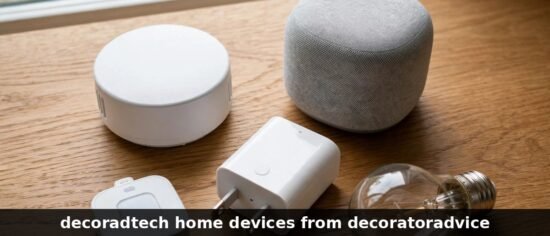
Home devices divide by their job in the loop — control, sense, or act — and choosing means checking each type for compatibility, power and placement first. The decoradtech home devices from decoratoradvice here follow that loop, with the check that decides each type in a real house.
Key Takeaways
- Devices fall into three families — controllers that decide, sensors that notice, and actors that switch, move or lock — and a working system needs the loop complete, not a shelf of one family.
- Compatibility is the first check for every type: the standard a device speaks decides which system it can join, and it cannot be upgraded later.
- Power is the second check: battery, mains and hardwired devices suit different places, and a device whose power fails silently is worse than none.
- Placement is the third check, and it is measured in the room: range, line of sight, height and the route of water or feet decide whether a device works or merely exists.
- Backup power is a device decision too: essential circuits are listed and summed before any generator or battery is sized.
How Is This Catalogue Organised?
Most device lists are organised by brand or by room, and both hide the question that decides success: what does this device do in the loop? This catalogue uses the loop instead. Controllers hold the schedules, rules and scenes — they are the house’s memory and judgement. Sensors feed it information — motion, contact, temperature, water, light, air. Actors spend that information — switches, plugs, bulbs, locks, valves, motors. A purchase from any one family is really a purchase of a fraction of a behaviour, and the catalogue’s entries are written so the missing fractions are visible.
The entries can be read in any order, but they reward being read in the loop’s order — control, sense, act, power — because each family’s checks borrow facts from the family before it: a sensor cannot be judged until the controller it will report to is known, and an actor cannot be judged until the sensor that will command it exists. Households replacing a single failed device can enter at that device’s entry; households starting fresh should walk the loop whole.
Each entry therefore gives the type’s job, then the three checks that decide it in practice: compatibility — which standards and systems the type speaks; power — how it is fed and how its feeding fails; placement — where it must physically be, measured against the room it serves. A device that passes all three checks in its intended spot is a sound buy in almost any brand; a device that fails one is a return waiting for its receipt.
Which Devices Control the Home?
The controller family holds the system’s brain, and it comes in three forms. The hub or bridge is a dedicated box that speaks several standards and translates between them; its check is the standards list itself, read against the devices the household already owns and honestly intends to buy. The voice assistant is a controller wearing a speaker’s clothes — convenient as an input, weaker as the sole centre, because its judgement lives in a distant cloud. The third form is the app on a phone, which is not a controller at all but a window onto one; households that mistake the app for the system discover the difference when the phone is flat.
Dedicated controllers hide inside other types, too: the smart thermostat is a controller for climate with a sensor and a relay attached, and a modern router quietly controls the network every other device depends on. The catalogue’s rule for the family is singularity: one centre of judgement per house, chosen deliberately, with everything else admitted as staff. Two competing controllers produce a house that argues with itself — scenes overwritten, schedules doubled — and the argument is always settled at the household’s expense.
| Family | Types in this catalogue | The check that decides them |
|---|---|---|
| Controllers | Hubs and bridges, voice assistants, smart thermostats, routers | One centre of judgement; the standards list read honestly |
| Sensors | Motion, contact, temperature, humidity, leak, light, air quality | Placement — range, height, and what the sensor can actually see |
| Actors | Bulbs, switches, plugs, locks, blinds, valves, appliance controls | The load and fitting they must match, measured at the point of use |
| Power and backup | Batteries, supplies, backup generators and battery stores | The essential-load list, summed before anything is sized |
Which Devices Sense?
Sensors cost the least of any family in this catalogue, and they punish careless placement the fastest. The motion sensor’s check is its field of view walked in person: mounted at its maker’s height, aimed along the route feet actually take, it notices arrivals; aimed across a room at a window, it notices sunshine and the dog. The contact sensor — door and window — is decided by the gap it must bridge and the honesty of its alignment; a door that flexes in its frame defeats a sensor fitted to a still afternoon. Temperature and humidity sensors earn their place away from the heat sources and draughts that lie to them — a sensor above a radiator governs a fiction.
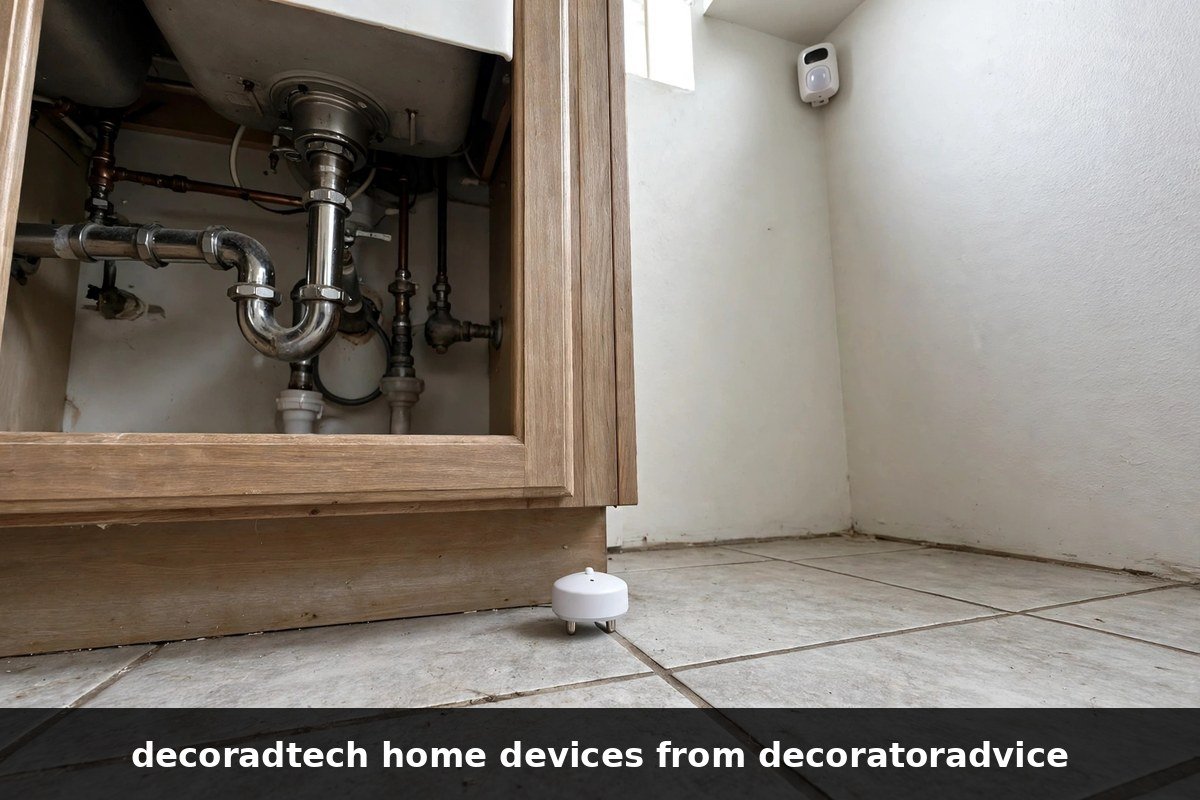
The leak sensor is the family’s quiet hero and the simplest placement of all: flat on the floor where water will pool, which the household knows from its own floors rather than from diagrams. Light and air-quality sensors serve narrower briefs — automating shades, warning of a stove left burning — and are bought for a named decision or not at all. Across the family, the pattern repeats: a sensor’s specification sheet describes its laboratory, while its placement describes its career, and the catalogue weights the career.
Which Devices Act?
Actors touch the physical house, so their checks are physical. The smart bulb’s check is the fitting and the switch in front of it: a bulb controlled by an app and killed by a wall switch is a bulb that works except when it matters, which is why the smart switch — replacing the wall control itself — is often the sounder actor in rooms with fixed lighting. Its check is the wiring behind the plate, including whether a neutral wire waits there, a fact older houses answer differently from room to room. The smart plug is the family’s apprentice: it makes a dumb device schedulable, and its check is the load it will carry, read off the appliance’s own plate rather than assumed.
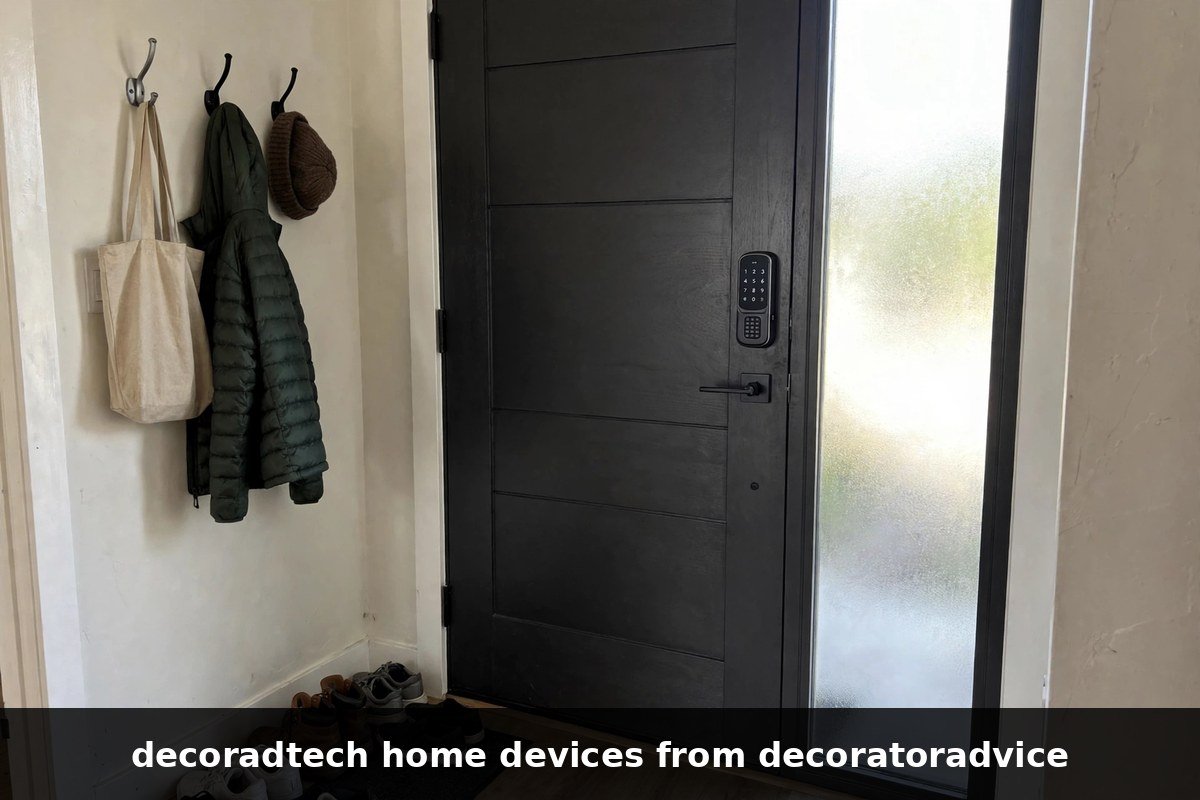
Locks and valves are the serious actors. The smart lock’s checks are the door’s measurements — thickness, backset, the alignment of bolt and keep — because a lock installed against a binding door fails as a lock before it fails as a gadget. The motorised valve, which can shut the house’s water on a leak sensor’s word, is the loop’s most valuable completed sentence and its most professional fitting; it belongs on the catalogue of households whose plumbing and budget both support it. Blinds and curtain motors close the family, checked against the weight they must lift and the power they can reach — a motor starved at the end of a long battery’s patience is a blind that rests halfway, permanently.
What Powers and Backs Up the System?
Power decides devices twice: once in how each is fed, and once in how the whole system survives an outage. At device level the families divide cleanly. Battery devices go anywhere and report their hunger unevenly — the catalogue’s preference is for types that warn early and sip slowly, in sensors above all. Mains-fed actors are dependable and confined to where the sockets are. Hardwired devices — switches, thermostats, valves — are the most permanent and the least forgiving of a wrong check at purchase.
At house level, the question is which devices must not die together: the router, the controller, the lock, the leak valve, the fridge. The honest method is a list, not a guess — each essential load’s draw, read from its plate or manual, summed into the total a backup must carry. That list, run through the Generator Size Calculator, sizes the backup — generator or battery store — to the house’s real essentials rather than to a showroom’s anxieties. A backup sized to everything is unaffordable; a backup sized to nothing in particular fails at the first outage; the list is what makes it engineering rather than shopping.
Before any type is bought, its five facts belong on one list:
| Fact to write down | Where the answer lives | What it rules in or out |
|---|---|---|
| The standard it speaks | The device’s box and the controller’s list | Whether it can join this house’s system at all |
| The load or fitting it must match | The appliance’s plate, the door’s measurements | Whether it works at its point of use |
| Its power source and its warning | The specification, honestly read | Whether it will fail loudly or silently |
| Its exact placement | The room, walked and measured | Whether it senses or switches the real thing |
| Its subscription, if any | The maker’s terms, before purchase | Whether its price is its price |
The Limits of Any Device Catalogue
A catalogue describes types, and three limits apply to every entry. The first is standards churn: the protocols devices speak are converging but not converged, and a device bought today joins the system that exists today — its maker’s future support is a promise, not a specification. The second is the subscription shadow: some types shift part of their function behind a monthly fee after purchase, and the catalogue’s compatibility check must therefore include the fee’s existence, not merely the device’s price.
Third comes the limit no specification sheet can remove: a device on its own is not yet a behaviour. The loop completes only when controller, sensor and actor agree in a rule the household actually wants lived by — a truth no catalogue entry can supply. Types should therefore be bought against a written behaviour, however short: what should happen, when, decided by what. Households that shop by behaviour return little; households that shop by shelf fill drawers.
Frequently Asked Questions
Does every device in the house need its own hub?
No — the hub is one device itself, and whether a system needs one depends on the standards its devices speak. Some devices work through Wi-Fi and an app alone; others require their maker’s bridge; newer shared standards are designed to let devices join a system directly. The catalogue’s answer is to choose the centre first and let it dictate the shopping list, rather than collecting devices and discovering the centre they needed.
What does compatibility actually mean?
That two devices can understand each other, directly or through the controller — the same standard spoken, or a bridge that translates. It is a property of the pair, not of either device, which is why a device labelled with a famous logo can still refuse the specific system in a specific house. Compatibility is checked before purchase, in writing, against the exact controller and standard — never assumed from a brand family.
Battery or mains — which is better?
Neither in general; each in its place. Battery suits sensors — small, sipping, placed where no socket reaches — provided the device warns before it starves. Mains suits actors that switch real loads and controllers that must never sleep. The failures come from crossing the families: a battery actor in daily heavy use, or a mains sensor exiled from the corner it needed to watch.
Can devices from different brands work together?
Yes, when a shared standard or a translating controller stands between them — that is precisely what hubs and the newer common standards exist to do. The working system is usually mixed; the failing system is usually mixed by accident, each device bought as an island. The difference is whether the centre was chosen first, which is the catalogue’s one repeated instruction.
What should the first device be?
The one that completes a behaviour the household already wants: commonly a controller plus a single room’s lighting, or a thermostat where climate costs bite, or leak sensors where water has already threatened once. A first device bought as a foundation — with its compatibility and power checks passed and its behaviour written down — teaches the house’s real requirements; a first device bought as a novelty teaches only the drawer’s depth.
Conclusion
Arranged by the loop, decoradtech home devices from decoratoradvice stop being a shelf and become a staff: controllers chosen once and singly, sensors placed by walking their ground, actors matched to their loads and fittings, and power — device and backup alike — listed before it is sized. Devices bought that way disappear into behaviour, which is the only compliment a house can pay them. The same check-first habit shapes the guidance throughout smart decoratoradvice, where every recommendation is measured against the house it will actually serve.