

A whole house improves best in phases: structure and systems first, then rooms in the order you live in them, each phase finished before the next begins. The home upgrade tips decoradhouse here build that phased plan, each stage earning its money before the next one spends it.
Key Takeaways
- Upgrade the whole house in phases — fabric and systems first, rooms second, finishes last — because later work should never undo earlier work.
- Rank every candidate upgrade by three numbers together: what it adds in use or value, what it costs in total, and how much disruption it brings per day.
- A phase is only a phase if it ends finished: a room handed back complete, cleaned and usable, not a stage abandoned at eighty percent.
- Hold the plan’s money in the same order as the plan’s work — contingency stays untouched by decoration, and no phase borrows from the next phase’s budget.
- Re-score the plan between phases, because prices, seasons and your own priorities will all have moved while the first phase was being built.
Why Does a Whole House Need Phases Rather Than One Big Push?
A whole-home upgrade fails in a predictable way when it is attempted as a single push: everything is open at once, nothing is finished, the money spreads thin across ten half-done rooms, and the household ends up living in a building site that produces no completed space to retreat to. Phasing is the discipline that prevents that shape of failure. Each phase is a complete, bounded piece of work with its own budget, its own order in the queue and its own finishing line, and the house stays a home throughout because most of it is always closed, clean and in use.
The order of the phases is not a matter of taste; it follows the way a house is physically built. Work on the fabric and the systems — roof, drainage, wiring, plumbing, heating — sits underneath every later decision, because a beautiful bathroom under a leaking roof is a loan taken against a ceiling. Rooms come next, in the order the household actually lives in them, and surface finishes come last precisely because they are the layer every earlier job would damage. The home upgrade tips decoradhouse in this guide are arranged in that structural order, and the order is the single most valuable thing in the plan.
Phasing also protects the plan from its own enthusiasm. Committing to one phase at a time means a change of mind, a change of income or a change of prices costs you a re-drawn later phase rather than a half-built house. The plan stays honest because it is re-examined at every boundary, and the household gets the psychological dividend that actually carries long projects: a finished room, early, proving the system works before the larger sums move.
How Do You Rank Upgrades by Value, Cost and Disruption?
Ranking is arithmetic before it is opinion, and it begins by putting every candidate upgrade on one page with the same three figures beside it. The first figure is the total honest cost — materials, labour, permits, disposal and the small fittings everyone forgets until the invoice. The second is the gain, stated in whichever currency the upgrade honestly pays in: resale value where that is genuinely the motive, daily use where it is not, or running-cost savings where the upgrade is a machine rather than a surface. The third figure is disruption measured in days the room or the house is out of normal service, because a cheap upgrade that closes the only bathroom for a fortnight costs more than its invoice says.
Dividing gain by disruption exposes the upgrades that quietly deserve to go first. A project whose value returns several times its cost while disturbing the house for a weekend belongs early in any sane queue, while a project returning half its cost across six weeks of upheaval belongs late, or nowhere. Running the value side of that comparison through the Renovation Net Gain Calculator keeps the ranking honest, because it forces the cost and the expected gain into the same arithmetic instead of letting enthusiasm estimate one and fear estimate the other.
Beware the two rankings people actually use when they skip this exercise. The first is ranking by visibility — doing whatever guests will notice — which produces a photogenic hall in front of a tired boiler. The second is ranking by fear — doing whatever broke most recently — which produces a plan written by emergencies. The written three-figure ranking defeats both, because it makes every phase defend itself in numbers the whole household can argue with before money moves rather than after.
| Candidate upgrade | Honest total cost includes | Gain it honestly pays in | Disruption counted as |
|---|---|---|---|
| Roof and drainage repairs | Scaffolding, materials, disposal of the old covering | Protection of every room and finish below them | Days of noise overhead; rooms stay usable |
| Heating or boiler replacement | Unit, fitting, controls, certification | Lower running costs and reliable heat in every room | One to three days without heating or hot water |
| Bathroom renewal | Suite, tiling, plumbing labour, waste removal | Daily use, every day, plus strong resale evidence | Days the household manages with one bathroom fewer |
| Kitchen renewal in stages | Units, worktops, appliances, electrical labour | Daily use and the strongest room-level resale case | Weeks of improvised cooking unless phased internally |
| Insulation and draught-proofing | Materials, fitting, making good afterwards | Lower bills and warmer rooms in every season | Hours per room; the gentlest disruption on this list |
| Full redecoration, room by room | Paint, paper, preparation materials | Appearance and protection of surfaces | One room at a time, each returned within days |
What Belongs in the First Phase — and What Must Wait?
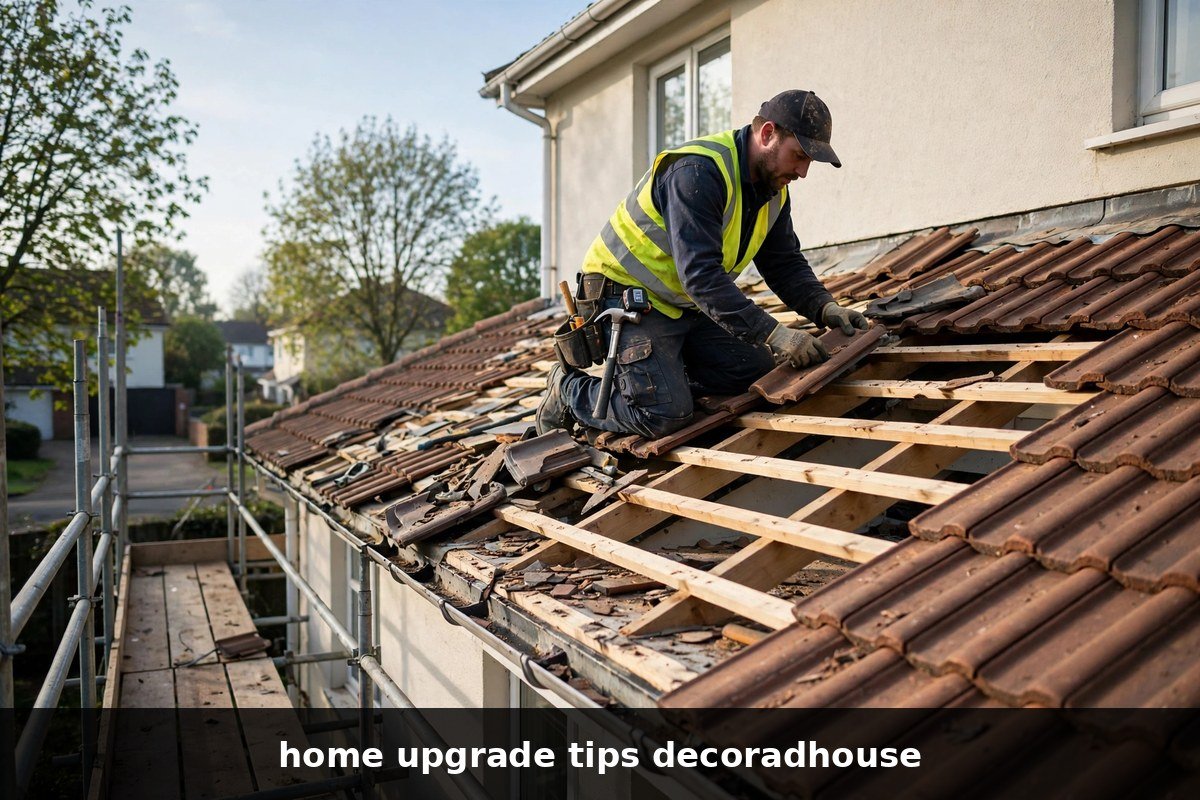
The first phase belongs to anything whose failure would damage everything after it. Roof coverings, gutters and drainage come first because water is the one enemy that converts small neglect into structural expense, and because every interior upgrade beneath a doubtful roof is being decorated on borrowed time. Wiring, plumbing and heating follow immediately behind, since these systems are both the house’s safety case and the layer that later work physically disturbs — nobody should be chasing a new cable through a freshly plastered wall, which is exactly what happens when finishes outrun systems.
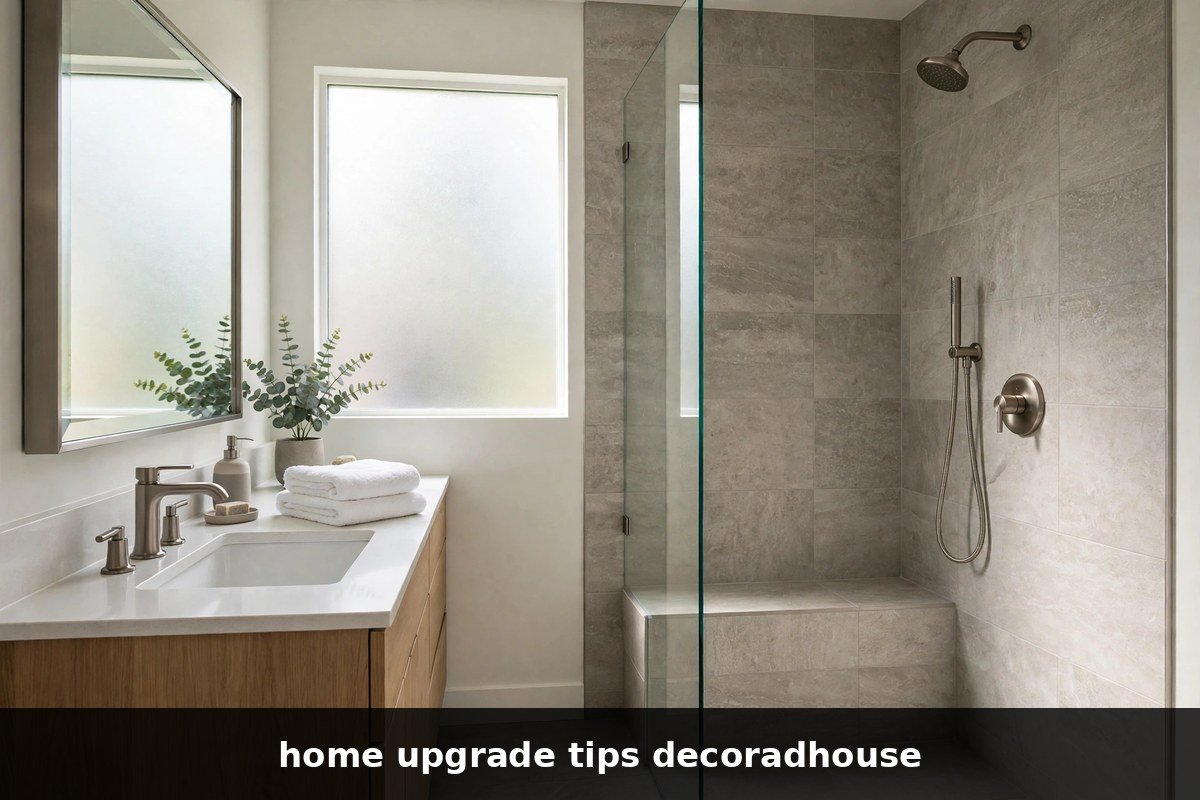
Within the rooms, the first phase takes the space whose improvement unlocks the rest of the project. In most houses that is either the bathroom or the kitchen, chosen not by glamour but by logistics: completing one fully serviced room gives the household a reliable base while the other is later taken apart, and it gives the plan a finished proof of its trades, its budget discipline and its realistic pace before the largest sums are committed. A household that learns its true per-phase cost on a bathroom will budget its kitchen with evidence instead of hope.
What must wait is everything whose value is purely surface. Decoration, flooring finishes and fitted furniture are the plan’s final layer in every room, not because they matter least but because they are the only layer that all other work can injure. Putting them last is not a punishment; it is the recognition that a finish installed early is a finish paid for twice — once to install it, and once to repair it after the plumber, the electrician and the plasterer have each needed the wall behind it.
How Should the Budget Be Split Across the Phases?
Split the money the way the plan splits the work: each phase carries its own budget line, its own contingency held inside that line, and a strict rule that no phase may quietly borrow from the next. Borrowing forward is how phased plans die — the kitchen that consumes the bathroom’s money leaves the bathroom unbuilt and the plan’s order destroyed, and the household ends up with the most expensive room finished and the most necessary one untouched. A phase that cannot be afforded whole should be postponed whole, because half a phase is not half the value; it is usually none of it, plus a mess.
Contingency belongs inside each phase rather than in one heroic central pot, because surprises are local. A phase excavating old plumbing needs a fatter reserve than a phase hanging doors, and holding the reserve beside the work that will need it keeps a nasty discovery in one room from silently eating the finishes of three others. The widely used planning habit of holding a percentage of each phase’s cost unspent until the phase is signed off is unglamorous and correct, and it converts most surprises from plan-killers into line items.
Leave the final phase’s money deliberately plain. By the time the plan reaches finishes and decoration, the household’s taste will have been educated by living through the earlier phases — colours will be chosen better, materials will be judged harder — and a finishes budget written in forensic detail two years early will be wrong in every particular that matters. Hold the amount, release the detail late, and let the plan’s last phase be designed by the people the earlier phases have made you into.
How Do You Sequence Phases Without Paying for Rework?
Rework is the tax a plan pays for ignoring physical dependency, and it is almost entirely avoidable on paper. The rule is that no phase may install something a later phase must disturb: floors go down after the plumbing beneath them is final, plaster is made good after the wiring inside the wall is final, and decoration happens after everything that drills, chases or floods has left the room for good. Written as a simple dependency list per room — what must be true before this phase may start — the rule costs an evening and saves the most demoralising line in any upgrade budget, paying twice for the same square metre.
Trades sequence the same way across the whole house. Messy and structural work travels ahead of clean and finished work, wet trades finish before dry finishes begin, and any job that produces dust is scheduled before any job that dust would ruin. Grouping the same trade’s work across nearby phases — the electrician’s two visits instead of five — also buys real money, because professionals price repeated mobilisation into small visits, while a phase plan that knows its own order can offer them efficient blocks of work instead.
| Phase order | What happens in it | What it must finish before the next phase |
|---|---|---|
| Phase one — fabric and water | Roof, gutters, drainage, any damp source traced and cured | A dry, weatherproof shell proven through real rain |
| Phase two — systems | Wiring, plumbing runs, heating, ventilation | Tested, certified systems with walls ready to close |
| Phase three — the anchor room | The bathroom or kitchen completed whole | One fully serviced room the household can rely on |
| Phase four — remaining rooms | Bedrooms and living spaces, one at a time | Each room returned finished before the next is opened |
| Phase five — finishes | Flooring finishes, decoration, fitted storage | Surfaces installed over final, undisturbed work only |
Season is a sequencing tool, too, and the plan should exploit it rather than endure it. Exterior and roof work belongs in the drier months, heavy interior work in the months the household can open windows against dust, and decoration in the mild weeks when paint cures as its maker intended. A phased plan spread across a year or two is not a slow plan; it is a plan with enough calendar in it to put each kind of work in its proper weather, which the single-push alternative can never do.
The Limits of a Phased Whole-Home Plan
Phasing cannot rescue a house whose problems are all urgent at once. A roof actively failing above rotten wiring above a dead boiler is not a queue but a triage, and the honest move there is emergency stabilisation first — make it dry, safe and warm — with the elegant phased plan written afterwards for everything that is merely desirable. Confusing triage with planning produces plans that schedule a new kitchen around a ceiling that is coming down, and the ceiling always wins the argument.
A phased plan also decays, and pretending otherwise is its second limit. Prices move between phases, products are discontinued, trades retire, and the household’s own needs change — a plan written once and obeyed blindly for three years will be faithfully executing a document about a family that no longer exists. The remedy is the re-scoring rule from this guide’s opening: at every phase boundary, the remaining queue is ranked again with current numbers, and phases may change order, shrink or leave the plan entirely without that counting as failure.
Finally, phasing trades speed for sanity, and the trade should be admitted. A household that needs the whole house transformed by a fixed date — a sale, a move, an arrival — may rationally choose one managed campaign instead of a two-year sequence, accepting the disruption and the professional management it requires. The home upgrade tips decoradhouse here serve the commoner case, the family improving the house it lives in, and for that household the phases are not the slow route. They are the route that finishes.
Frequently Asked Questions
In what order should a whole house be upgraded?
Fabric first, then systems, then rooms, then finishes: roof, drainage and damp before wiring, plumbing and heating; systems before the anchor room — usually the bathroom or kitchen — is completed whole; remaining rooms one at a time; and flooring finishes, decoration and fitted storage last of all, because every earlier trade can damage them. Any order that installs a finish before the work behind it is final will pay for that finish twice.
How do I decide which upgrade deserves to go first?
Rank every candidate by the same three figures — honest total cost, the gain it pays in use, value or savings, and the days of disruption it causes — and let gain divided by disruption argue for the early places. Upgrades that protect the whole house, like roof and drainage work, outrank their own numbers because everything else sits beneath them. Expensive cosmetic work with weeks of disruption and modest gain belongs late in the queue, or off it.
How much contingency should each phase carry?
Hold a reserve inside each phase’s own budget, sized to what that phase might uncover: phases opening old plumbing, wiring or structure deserve a generous reserve, while phases of pure finishing work need a thinner one. Keep the reserve unspent until the phase is signed off, and never let one phase’s surprise consume another phase’s money — that borrowing is how phased plans lose their order and die.
Can I live in the house while a phased upgrade runs?
Living in the house throughout is precisely what phasing is designed to allow. Because only one part of the house is open at a time, the rest stays closed, clean and in normal use, and completing one fully serviced room early gives the household a reliable bathroom or kitchen while later phases proceed. The plan should state, for each phase, which rooms stay live and what temporary arrangements — a kettle-and-microwave corner, a borrowed shower routine — bridge the gap.
What should I do when prices rise between phases?
Re-score the remaining plan at the phase boundary rather than stretching the current phase thinner. New prices may change the ranking, shrink a later phase to its essentials, or move a phase behind a season of saving — all of those are the plan working as designed. What breaks plans is silently absorbing rises by cutting contingency and quality inside a phase already running, which converts a price problem into a workmanship problem.
Conclusion
Taken together, home upgrade tips decoradhouse describe a single discipline: rank everything in honest numbers, build in the house’s own physical order, finish each phase completely before opening the next, and re-score what remains whenever the world moves. A house upgraded that way is never a building site for long, and it is never finished by accident either — it improves room by room, on evidence, at a pace the household can actually live inside. For more home improvement advice you can measure, visit smart decoratoradvice.