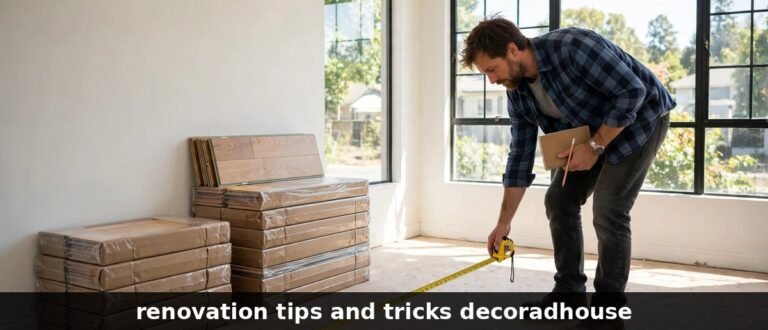

An upgrade tip is worth following only after it has survived four questions: what it changes, what it truly costs, what it pays back and what it disturbs. The decoradhouse upgrade tips by decoratoradvice here are a vetting method — a way to judge advice before it becomes an invoice.
Key Takeaways
- Treat every upgrade tip as a claim that must be evidenced, not an instruction: the tip’s job is to persuade you, and yours is to test it.
- Measure the before-state first — the bill, the dimension, the failure you actually have — because a tip without a baseline cannot prove it improved anything.
- Cost a tip in full: materials, labour, making good, disposal, and the maintenance the upgrade itself will demand for years afterwards.
- Check payback and disruption together, in numbers: money returned per year, and days the house is out of normal service while the work happens.
- Refuse tips carrying red flags — guaranteed savings, one-size claims, silence about your house’s actual condition — however many times they are repeated.
Why Do Upgrade Tips Need Vetting at All?
Tips travel badly. Advice formed on a large detached house with a new boiler crosses the internet and lands on a small flat with storage heaters, shedding every condition that made it true on the way. The person repeating the tip rarely lies; they simply report what worked in their house, at their prices, with their walls and their weather — and none of those four things are yours. The decoradhouse upgrade tips by decoratoradvice in this article therefore start from an unfashionable position: a tip is not knowledge, it is a hypothesis about your house, and hypotheses get tested before they get funded.
The cost of skipping the test is not usually catastrophe; it is the slow leak of respectable money into upgrades that were true somewhere else. The insulation tip applied to a house whose heat was actually escaping through the floor. The window tip applied to a house whose bills were driven by an ancient boiler. Each was a good tip — for the house it came from. Vetting is the short, unglamorous process that asks of every candidate upgrade: what problem do I measurably have, and is this tip’s mechanism actually aimed at it?
Vetting also defends against the tip economy itself. Advice is rewarded for being striking, not for being conditional, so the versions that spread are the ones with the conditions stripped out — the saving stated, the caveat deleted. A householder who restores the caveats before spending is not being cynical about advice; they are returning it to the form it had when it was true.
What Should You Measure Before Believing a Tip?
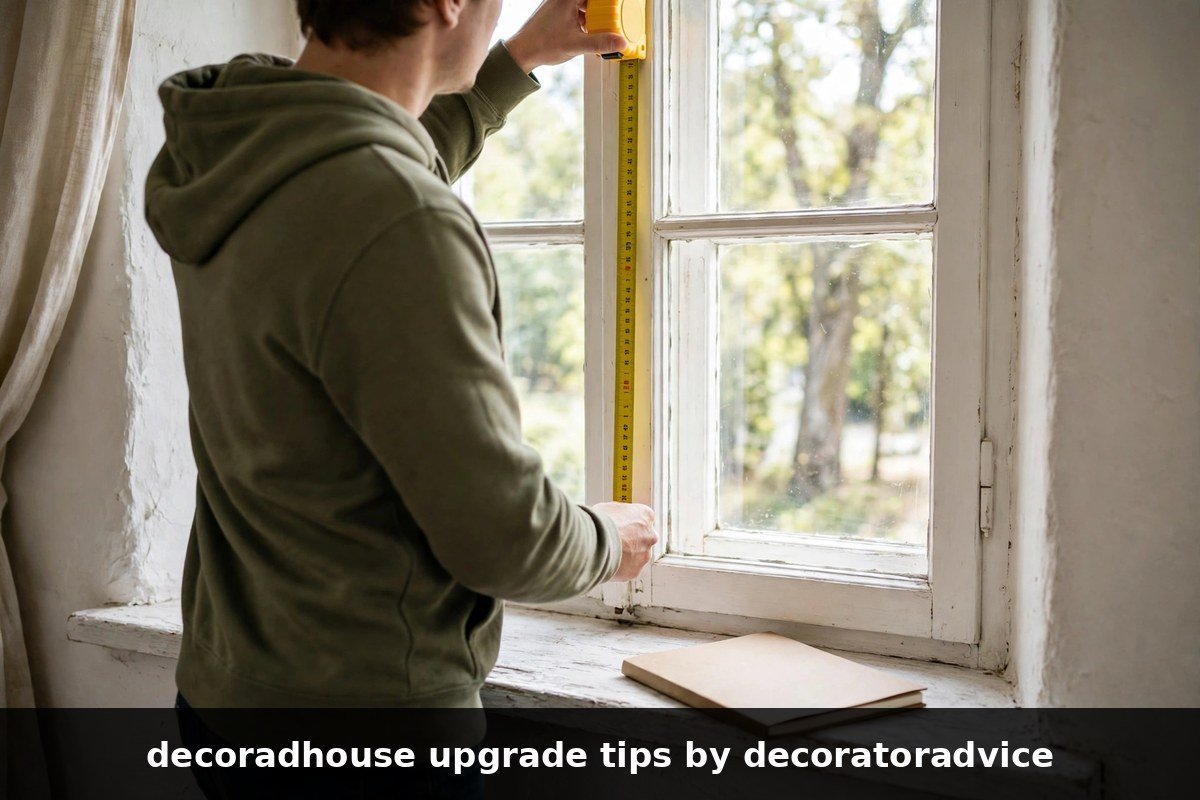
Measure the before-state, in the unit the tip claims to improve. If the tip promises lower heating bills, the baseline is your actual consumption across a full cold season, taken from bills rather than impressions, because a mild winter flatters every upgrade and a harsh one slanders it. If the tip promises space, the baseline is the measured room — its real dimensions, its wasted corners quantified. If the tip promises to fix a failure — a cold room, a condensation problem, a door that sticks — the baseline is the failure described precisely enough that its absence could later be recognised: which room, how cold relative to the others, on which mornings the condensation forms.
The baseline does a second job: it tells you whether the problem is big enough to fund. Many admired upgrades solve problems the household does not measurably have. A tip for draught-proofing applied to a house whose baseline shows its heat loss concentrated in an uninsulated roof is not wrong, it is merely third in a queue nobody wrote down. Measuring first converts a pile of tips into an order, and the order is where the money is saved.
Keep the measurements in one written place, with dates, because vetting is comparative work. The figure that matters is never the tip’s figure; it is your figure beside the tip’s claim, and that comparison can only happen if your figure exists before the salesman, the video or the neighbour supplies theirs. A household that measures first negotiates from evidence; a household that measures never negotiates from hope.
How Do You Cost a Tip Honestly?
Cost the whole stack, not the headline item. The tip’s sticker price — the unit, the material, the product in the photograph — is usually the smallest honest number in the project. Around it gather the labour to install, the making good that installation always creates, the disposal of what was removed, the certification or inspection the work may require, and the small fittings that no photograph shows and every invoice includes. An upgrade costed on its product alone is not a bargain; it is a down payment on a surprise.
Then cost the years, not just the day. Some upgrades carry a maintenance rent: filters, seals, servicing, repainting cycles, subscriptions without which the smart feature becomes a dumb one. Others quietly remove a maintenance cost the old arrangement carried. The honest figure for a tip is its installed stack plus its annual rent, set against the old arrangement’s annual rent — because an upgrade that costs more to own than it saves in running is a purchase, not an improvement, and should be admitted as one.
| Cost layer | What belongs in it | The way it is usually forgotten |
|---|---|---|
| The headline item | The product, unit or material the tip is actually about | Treated as the whole cost because it is the only priced number in the advice |
| Installation labour | Fitting at a real rate, including the slow first hours of any job | Assumed to be “a weekend” of your own time at no value, or omitted entirely |
| Making good | Plaster, paint, tiling, flooring repairs the installation disturbs | Discovered afterwards, when it is reclassified as a separate little job |
| Disposal and compliance | Skip or removal fees, certificates, inspections, notifications | Left out because the tip-giver’s project predates the current rules |
| The annual rent | Servicing, filters, seals, repainting, subscriptions the upgrade needs | Never mentioned, because the tip describes the day of installation only |
Get the stack priced in writing before deciding, even for work you will partly do yourself — your own hours belong in the costing at an honest rate, because a tip that saves four hundred in materials by spending thirty of your hours has made a trade, and you are entitled to see it stated. Written prices also expose the tip that cannot survive quotation: advice that depends on a product being improbably cheap, or on labour that no professional will actually charge, dissolves at the quote stage, which is exactly where you want it to dissolve.
How Do You Check Payback and Disruption?
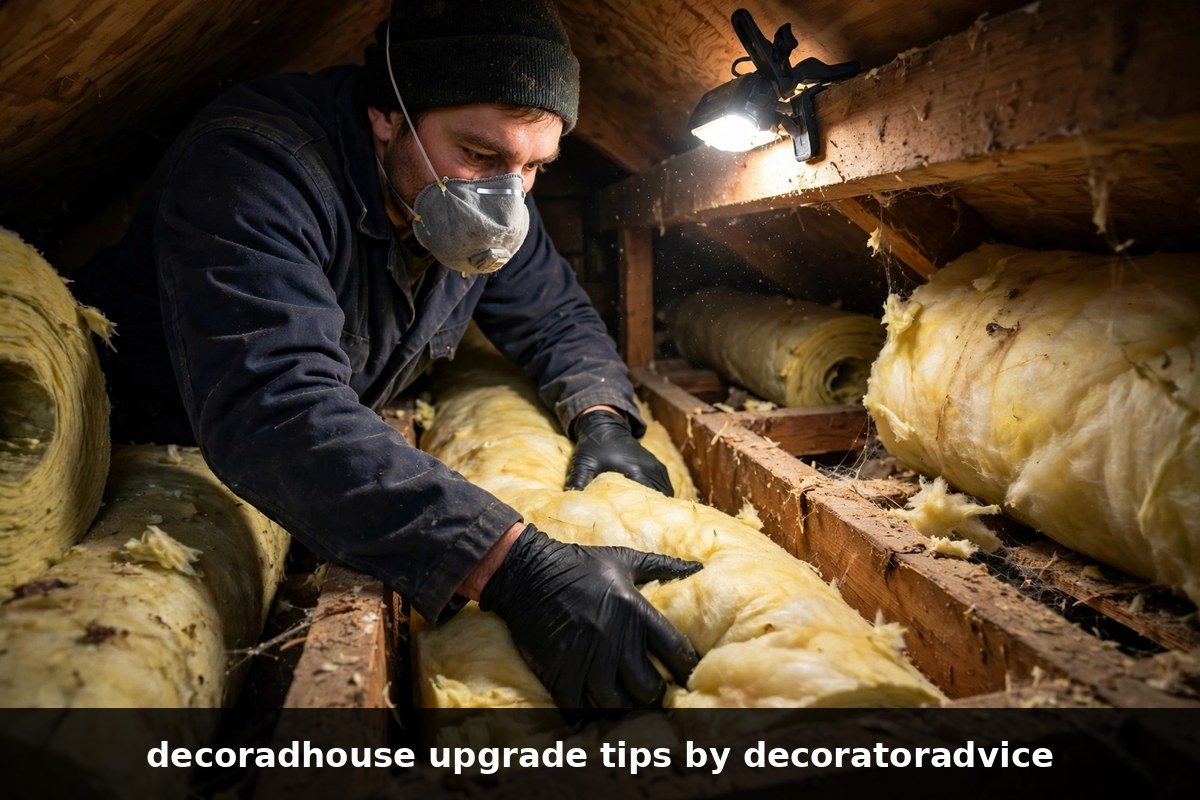
Payback is the installed stack divided by the honest annual saving, and both numbers must be yours. The saving is the improvement in your measured baseline — your bills, your consumption — not the percentage in the tip, because percentages travel between houses even worse than tips do. For energy upgrades in particular, run your own figures through the Energy Upgrade Payback Calculator, which forces cost and saving into the same arithmetic and returns a payback period you can argue with, instead of a promise you can only believe or disbelieve.
Judge the payback period against the upgrade’s own lifespan, not against your patience. An upgrade that pays back in six years and lasts twenty-five has made its case; one that pays back in nine and is typically replaced in ten has not, whatever its annual saving looks like in isolation. And hold a category apart in your mind: upgrades bought for comfort, safety or daily pleasure do not need a payback at all — but they should be admitted into that category openly, priced as purchases, rather than dressed in savings they will never produce.
Disruption is the second currency, counted in days the house is out of normal service and in the rooms taken while the work runs. A cheap upgrade that closes the only bathroom for a week costs more than its invoice; an expensive one completed in a day by a crew that leaves the house clean may be the better trade. Ask every tip the disruption question explicitly — how many days, which rooms, what stays usable — and treat a tip that has never considered it as advice written by someone who did not live in the house during their own project.
| Check | The question to answer in numbers | A result that should stop the spend |
|---|---|---|
| Baseline | What is my measured problem, in bills, dimensions or failures? | The problem cannot be stated, or is smaller than the upgrade’s cost |
| Installed stack | What is the full written price including making good and disposal? | The quote is a multiple of the tip’s implied price with no explanation |
| Payback | Installed stack divided by my honest annual saving | Payback period approaches or exceeds the upgrade’s working life |
| Disruption | How many days, which rooms, what remains usable meanwhile? | The only bathroom or the heating is out for longer than the household can bridge |
| Reversibility | Can this be undone, and at what cost, if the claim proves false? | Irreversible work resting on an unmeasured claim |
Which Red Flags Mark a Tip Not Worth Taking?
Guaranteed savings are the first flag, because honest savings are always conditional — on the house, the weather, the price of energy and the behaviour of the household. A tip that promises a percentage without asking a single question about your house is not describing your future; it is describing its own marketing. The same suspicion applies to one-size claims: the product that suits every property, the thickness that is always right, the setting that is always optimal. Houses differ too much for universals to survive, and the tip that acknowledges none of the differences has not met your house yet.
Silence about condition is the second flag. Sound upgrade advice asks what state the existing thing is in — the wall, the boiler, the window frame — because the right move differs completely between a sound item performing badly and a failed item performing as failed items do. A tip that prescribes without diagnosing is a prescription written before the examination, and it deserves the same trust.
The third flag is urgency. Tips that must be acted on this week, before prices rise, before the scheme ends, before the neighbours all do it, are recruiting your haste as a substitute for your evidence. Genuine upgrades keep: the wall will still be there when the measurements are done. A household that adopts the rule “nothing irreversible is decided in a hurry” will find that most urgency was weather — loud, pressing, and gone by the weekend.
The Limits of Vetting
Vetting cannot manufacture certainty, and pretending otherwise would repeat the sin it exists to correct. Some savings only reveal themselves across seasons; some comforts refuse to be measured at all; some upgrades — a safer stair, a warmer child’s room — carry value in a currency no calculator holds. The method here narrows the field of honest argument; it does not close it. Where the numbers end in a genuine tie, the household’s own priorities are the correct tiebreaker, and a decision made that way is not unvetted, it is vetted to the limit of what numbers can say.
Vetting also has a cost, and the cost must stay proportionate. Measuring, costing and checking are worth days of effort on a boiler and absurd on a lightbulb. Match the weight of the test to the weight of the spend and the irreversibility of the work: small, reversible upgrades can be tried the way all cheap experiments are tried — by doing them and watching the baseline move. The full four-question treatment is reserved for money that cannot come back.
Finally, vetting judges tips, not futures. Prices move, schemes open and close, and a tip correctly refused in one year can be correctly taken in another when its numbers change. The written baselines and costings are what make that re-judgement possible later — keep them, because the tip you refuse today at one price may deserve a different answer at another, and you will want your own figures when it returns.
Frequently Asked Questions
How long should an upgrade take to pay for itself?
Shorter than its own working life, with margin to spare — that relationship matters more than any single number of years. An upgrade that repays its installed cost well inside the period it will serve, leaving years of pure saving or service afterwards, has made its case. One whose payback period nearly equals its lifespan is a loan to yourself at no interest, and one whose payback exceeds its lifespan never pays back at all, however the annual figures are arranged.
Should I trust before-and-after photographs as evidence for a tip?
Trust them as evidence of appearance, never of performance. A photograph can show that a room looks warmer; it cannot show a bill, a temperature or a payback period, and it is usually taken in the best light of the best week. Ask for the numbers the photograph is standing in for — the measured before and after — and treat a tip whose only evidence is pictorial as an unmeasured claim, however beautiful the picture.
What should I do when two upgrade tips contradict each other?
Return both to the baseline. Contradictory tips usually arise from different houses: one assumes the heat escapes upward, the other that it escapes through the walls, and in your house only one of those — or neither — is measurably true. Your own figures arbitrate the dispute, and where the figures are not yet clear, the next step is a measurement, not a choice between the louder voices.
Is the cheapest quote the best test of a tip’s real cost?
No — the cheapest quote tests the floor of the market, not the cost of your project. Compare quotes on the same written scope, including making good, disposal and compliance, because a low quote that excludes the surrounding work is not cheaper, it is merely less complete. The honest cost for vetting purposes is the complete stack from a quote you could actually sign, not the smallest number anyone was willing to say aloud.
When is a tip right for my neighbour but wrong for me?
Whenever your baselines differ — and they almost always do. Different walls, different heating, different occupancy, different tariffs: the tip’s mechanism acts on your neighbour’s measured problem, and if your measurement shows a different problem, or a smaller one, the same action buys you a smaller result for the same money. This is the commonest reason good tips fail, and it is nobody’s fault; it is simply what happens when advice travels and measurements do not.
Conclusion
Judged the way this guide judges them, decoradhouse upgrade tips by decoratoradvice come down to a habit rather than a list: measure the problem before believing the solution, cost the whole stack before admiring the saving, and divide the one by the other before the money moves. Tips that survive that treatment deserve your confidence, and tips that refuse it have told you everything about themselves. You can find more home improvement advice, measured the same way, at smart decoratoradvice.