

Rooms work lit in layers — a general wash, task light where work happens, accent light for the eye to rest on — and most disappointing rooms are one layer trying to do all three jobs. The decoradhouse lumination ideas build those layers room by room, sized from real dimensions.
Key Takeaways
- Think in three layers — general, task, accent — and audit every room for the layer it is missing before buying anything.
- Size the general layer from the room itself: its area and ceiling height decide how much light the wash must deliver.
- Hold one bulb temperature family across adjoining rooms; mixed temperatures are the commonest reason new lighting feels wrong.
- Controls are a layer too: dimmers and well-placed switches turn three layers into a room that changes with the hour.
- New circuits, bathroom zones and outdoor wiring are an electrician’s territory — ideas stop where the regulations begin.
What Does Layered Lighting Mean in Practice?
Stand in almost any unsatisfying room at night and the diagnosis is the same: one ceiling fitting, working alone, producing a light that is simultaneously too harsh at the centre and too weak at every edge where life actually happens. Layered lighting is the refusal of that single source. The decoradhouse lumination ideas in this article divide light by job instead: a general layer that washes the room evenly enough to move through it, a task layer aimed at the specific places where eyes work — the reading chair, the worktop, the desk, the mirror — and an accent layer whose only job is depth, picking out a picture, a plant, a textured wall, so the room has somewhere for the eye to land.
The layers are not a luxury taxonomy; they are how one room serves a whole day. Morning wants the general layer and daylight. Evening work wants task light added where the work is. Night wants the general layer dimmed or off and the accents carrying the room at low, warm intensity. A room with three layers can be all three of those rooms; a room with one pendant can only be a waiting room with furniture.
The audit that starts every scheme is therefore embarrassingly simple: name the layer each existing fitting belongs to, and find the missing one. Most rooms are missing task or accent, not brightness — which is why their owners have been buying ever-stronger bulbs for a problem that was never about strength. Light, like paint, is a proportion before it is a quantity.
How Much Light Does Each Room Actually Need?
The general layer is sized from the room, not from the fitting shop’s display: the floor area sets the total light the wash must deliver, and the ceiling height and the room’s colours decide how much of what is installed survives to be useful — dark walls and high ceilings both tax the budget. Rather than guess at the merchant’s, run the room’s dimensions through the Room Lighting Calculator and take its figure as the general layer’s target, then divide that target among fittings rather than concentrating it in one heroic source: three moderate sources wash a room more evenly than one powerful one, and evenness is what the general layer is for.
| Layer | Its job in the room | Where it typically comes from |
|---|---|---|
| General | Even, shadow-soft light for moving, cleaning, finding things | Ceiling fittings in plurality, wall washers, the room’s daylight by day |
| Task | Focused light at the exact point eyes work | Reading lamps, worktop strips, desk lamps, mirror lights |
| Accent | Depth and focus — the eye given somewhere to land | Picture lights, uplighters, a lit shelf or plant, low lamps |
Task light is sized by the task, and its rule is position over power: a modest lamp at the reader’s shoulder outperforms a bright one across the room, because light falls off with distance faster than intuition expects, and glare from a visible bulb in the sightline undoes the benefit of brightness. Accent light is sized by nerve: it is the layer allowed to be dim, directional and dramatic, and its fittings are chosen for where their beams land, not for how the fittings photograph in a catalogue.
One further measurement disciplines the whole article: ceiling height. A pendant’s drop, a downlight’s spread and a lamp’s shade height all behave differently under a low ceiling than under a tall one, and rooms that feel wrongly lit despite new fittings are often rooms whose fittings were chosen for a ceiling half a metre higher. Measure the height, write it on the room’s audit, and let it veto fittings the way the survey lets dimensions veto furniture.
How Do the Layers Divide Between Rooms?
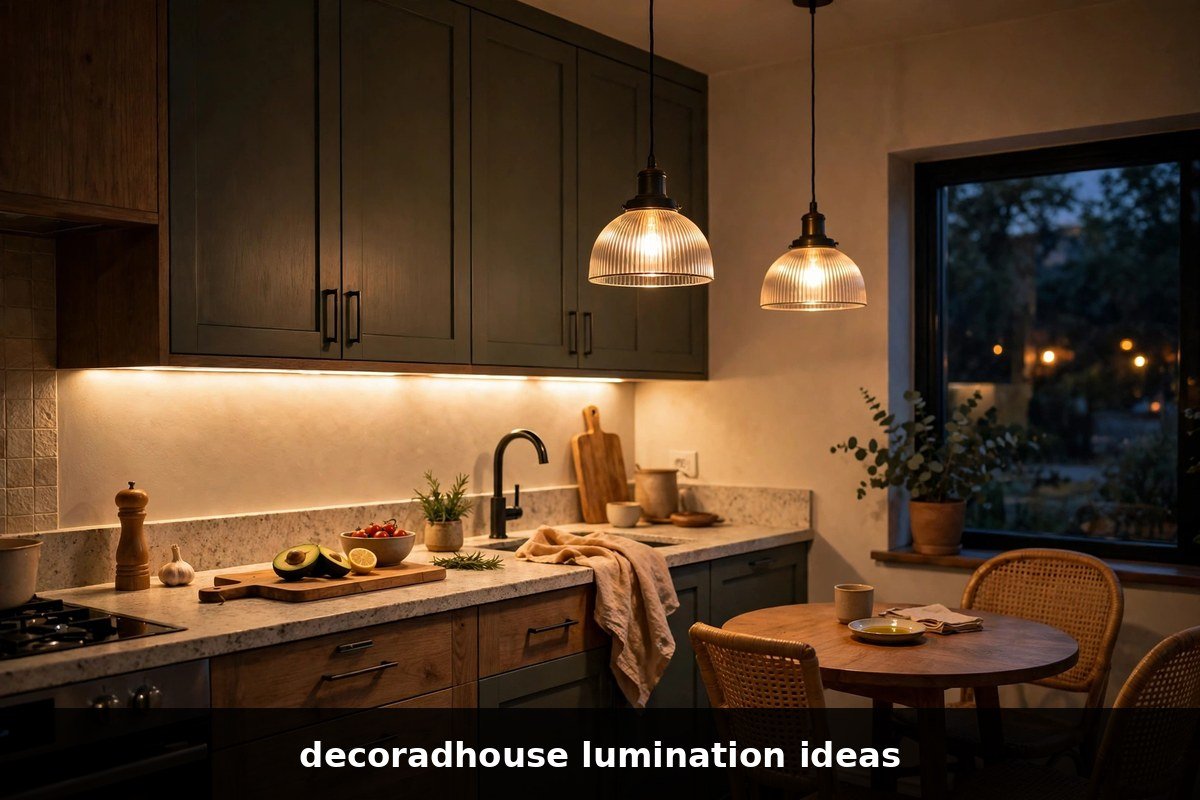
The living room is the layered room in full: general wash for the family’s traffic, task light at the reading chair and wherever screens and books actually live, accent on the room’s one chosen feature — and its characteristic failure is a general layer asked to be cosy at night, which no undimmed ceiling light has ever managed. Give the living room’s evening to its lamps and accents, and the ceiling fitting becomes what it should be: the light for finding things, not the light for living in.
The kitchen divides differently: its task layer is the star, run continuously along the worktops as under-cabinet light that puts the work surface in front of the cook rather than behind their own shadow, while its general layer covers the floor’s traffic and its accent — a lit shelf, a pendant over the table — softens what is otherwise the house’s most clinical room. The bedroom inverts the emphasis again: a gentle general layer, task light at the bed’s both sides placed for reading without lighting the partner’s pillow, and accent kept minimal, because a bedroom’s depth should come from darkness at its edges rather than from display.
| Room | Layer that leads | The mistake that room keeps making |
|---|---|---|
| Living room | Accent and task share the evening; general serves the day | One bright pendant expected to be both work light and atmosphere |
| Kitchen | Task, continuous along the worktops | A central light behind the cook, shadowing every work surface |
| Bedroom | Task at the bed, reading height, both sides | A general layer so bright the room cannot wind down |
| Bathroom and hall | General with honest mirror task light | Decorative fittings over the mirror that light the ceiling, not the face |
Bathrooms and halls close the audit: the bathroom’s mirror light is task light with a face as its work surface, best delivered from the sides at face height rather than from above, and always within the safety zoning that governs fittings near water — the one room where ideas must be checked against regulations before fittings are even shortlisted. The hall, finally, wants a general layer that does not die at its corners and, in long halls, a rhythm of fittings rather than one source bravely failing at distance. Lighting is the last layer of a longer sequence — the decorating process in work order shows where it falls, after walls and textiles have had their say.
What Do Bulb Temperature and Controls Decide?
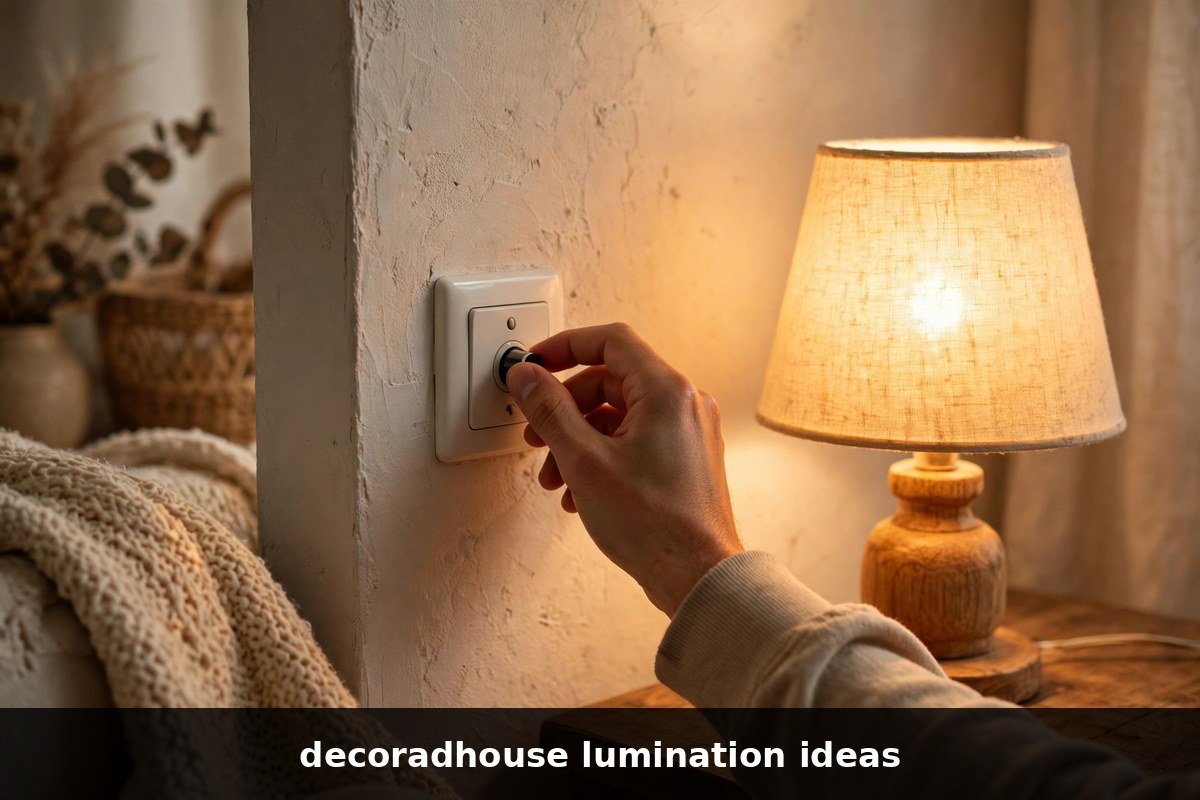
Temperature — the warmth or coolness of the light itself, printed on every bulb’s box in kelvin — is the invisible scheme decision. Rooms lit from one temperature family read as one household’s intention; rooms where a warm lamp fights a cool ceiling fitting read as an argument nobody remembers starting. The discipline is simple: choose the family’s temperature for the home’s lived-in rooms — most households settle somewhere in the warm range for evening rooms — and hold it when replacements are bought, because temperature drift happens one emergency bulb at a time. Cooler light has its legitimate posts in the house — a workshop, a utility, a task bench — posted deliberately, not wandered into.
Controls decide whether the layers can actually be used as layers. A dimmer on the general layer is the single highest-value control in the house, because it lets the wash retire gracefully as the evening comes down; switches placed where the room is entered, controlling the layer the entrant needs, beat the single switch that fires everything at once. Two-way switching on stairs and halls, and lamps on accessible switches rather than buried sockets, complete the discipline — light that is awkward to control will be left in whatever state it was last in, and a layered scheme whose layers cannot be separately summoned is a scheme in name only.
A compatibility caution rides with the controls: not every LED bulb dims, and a dimmer and bulb that dislike each other announce it in flicker and buzz. Buy bulb and dimmer as a checked pair — the bulb’s box states its dimmability, and the dimmer’s stated load range must cover the circuit’s actual bulbs — because a flickering room is worse than a merely bright one, and the fix is in the specification, not in tolerance. Swapping bulbs and fittings is also one of the few lighting changes that fits a weekend, as the lighting swaps in weekend upgrades measure out.
How Does the Porch and Garden Zone Finish the Scheme?
The outdoors takes one zone in this article — deliberately one — because its job here is continuity, not coverage: the porch and the first of the garden should feel like the house’s lighting extending a hand, not like a separate installation with its own ideas. The practical rule is temperature: outdoor fittings in the same warm family as the hall inside make the threshold disappear at night, so the garden reads as the house’s last room rather than as a floodlit perimeter. The porch light serves the arrival — step, lock and faces — and one or two low garden accents, aimed at a tree, a wall or the path’s turn, give the depth the accent layer gives indoors.
That restraint is also the honest scope: a full garden lighting design — circuits across beds, water features, security strategy — is its own project with its own article’s worth of decisions, and patio decoration is a neighbouring topic again. Here the zone is finished when arrival is safe, the threshold is seamless, and one garden feature is lit well enough to be looked at from the window on a winter night. Anything more is a scheme asking to be designed on its own day.
The Limits of Lighting Ideas
Regulations draw the hardest boundary. New circuits, moved fittings in bathroom zones, and outdoor wiring are work for a qualified electrician under the wiring rules wherever the house stands; the ideas in this article operate on the existing points — bulbs, shades, lamps, plug-in layers and like-for-like choices — and treat every new point as a professional’s visit to be planned, not a weekend’s improvisation. A layered scheme that needs two new points is still a good scheme; it simply has a tradesman’s chapter in it.
Architecture sets the second limit. Ceiling height, beam positions, ceiling construction and the absence of a ceiling void all veto fittings that catalogues happily sell, and north-facing rooms will never hold evening light the way south-facing ones borrow it — the audit must be of the room that exists. The third limit is the smart one: app-controlled systems add genuine convenience and genuine lock-in together, and a household should adopt them knowing the bulbs may outlive the platform. Layers, temperatures and controls will outlast any app; design those first, and let the technology merely serve them.
Frequently Asked Questions
How many light sources does a living room actually need?
Count layers, not fittings, but the honest arithmetic usually lands between five and seven sources: one or two for the general wash, one at each place the room is read or worked in, and one or two accents — with the understanding that several may rarely burn together. A room lit by fewer is usually missing a layer; a room lit by more is usually compensating for fittings in the wrong places, which is a layout problem wearing a shopping list.
What colour temperature should the bulbs be?
One family, held consistently — for most lived-in rooms a warm temperature in the region the bulb boxes label warm white, with cooler light posted deliberately only where tasks genuinely want it, such as a workbench. The exact figure matters less than the consistency: a house where every replacement bulb matches the family’s temperature never has the argument between fittings that makes rooms feel unsettled, and the figure, once chosen, belongs on the audit so future purchases cannot drift.
Can I mix warm and cool bulbs in one room?
You can, and the room will usually tell you not to: mixed temperatures make each source look like a mistake — the warm one yellow, the cool one clinical — because the eye judges temperature relatively, side by side. The exceptions are deliberate and separated: a cool task light at a desk, kept to its pool of light, inside an otherwise warm room. Adjacency is what offends; distance and intention excuse almost anything.
Do dimmers work with all LED bulbs?
No — dimmability is a specification, not a default, and a non-dimmable bulb on a dimmer will flicker, buzz or fail early. The bulb’s packaging states whether it dims, and the dimmer itself has a load range the circuit’s bulbs must fall inside; the two are bought as a checked pair, ideally tested on one fitting before the room is converted. Where the pair is right, dimming is smooth and silent; where it is wrong, no amount of adjusting will persuade them.
Where do I start in a house that feels dark everywhere?
With the audit, room by room, before any purchase: name each room’s layers, note the ceiling height and the bulbs’ temperatures, and find the missing layer — which in a whole dark-feeling house is very often task and accent, not general brightness. Then take the room the evenings are lived in and complete its layers with lamps on existing sockets, which needs no electrician and proves the method in a week. Houses are relit the way they are decorated: one room honestly finished teaches more than five rooms brightened at random.
Conclusion
Gathered room by room, decoradhouse lumination ideas come down to a single audit repeated with conviction: three layers named, the missing one supplied, the general wash sized from the room’s own dimensions, one temperature held across the house, and controls that let the layers be summoned separately as the day changes. Rooms finished that way stop being lit and start being inhabited at night — which was the entire point the single pendant was failing to make. Rooms measured for light as carefully as for furniture fill the pages at smart decoratoradvice, where every idea is checked against a real room first.



1 comment