

Decorating a house works when it runs as a process, not a series of purchases: survey and measure, fix the palette, place anchors, then layer walls, textiles and light. The how to decorate my house decoradhouse method here follows that order from first measurement to final walkthrough.
Key Takeaways
- Decorate in work order, not shopping order: each stage decides things the next stage depends on, and reversing them is what makes decorating expensive.
- Measure every room before choosing anything — dimensions, light direction, and what must stay — because those three facts govern every later choice.
- Fix the palette from something already fixed in the house, and test it at real scale in the room’s own light before committing.
- Anchors before layers: the largest pieces go in first, sized to the room, and everything smaller is chosen against them.
- Finish with a walkthrough at different hours and a written snag list; a room judged only at noon is a room half judged.
Where Does the Decorating Process Begin?
It begins with a survey, taken room by room with a tape and a notebook rather than with a shopping list. Measure each room properly — length, width, ceiling height, the positions of doors, windows, radiators and sockets — because every later decision, from rug size to curtain drop to whether the sofa fits through the door at all, is an arithmetic problem wearing a decorating costume. Record the light as carefully as the dimensions: which way the windows face, when direct sun enters, which corners never brighten. A palette that sings in a south-facing room can go muddy in a north-facing one lit by the same sky at a different angle, and the survey is where that is learned cheaply.
The survey’s second half is the brief: for each room, one honest paragraph about who uses it, for what, and what fails about it today. Rooms fail specifically — the chair nobody sits in because the lamp is wrong, the table that seats six in a room that eats two. The how to decorate my house decoradhouse process treats those failures as the work list, because decorating that does not answer a room’s stated failure is shopping with extra steps.
| What to measure or note | The tool | Which later decision it governs |
|---|---|---|
| Room length, width, ceiling height | Tape measure, recorded to the centimetre | Furniture scale, rug size, whether pieces fit at all |
| Door widths and the turn into the room | Tape measure on the access route | Whether the anchor piece can physically enter the house |
| Window direction and sun hours | Compass on a phone, noted across a day | Palette strength — how much colour the light will carry |
| Radiator, socket and switch positions | Notebook sketch of each wall | Furniture placement; which walls can hold what |
| What must stay — floor, suite, inherited piece | An honest list, agreed before shopping | The palette’s fixed point and the budget’s first claims |
Decide at survey stage what stays. Every house has fixed points — a floor that is not changing, a suite that is sound, a piece with a claim on the room — and pretending they are not fixed does not free the palette; it just postpones the collision to the expensive end of the process. The stays are written down, agreed, and treated as the process’s constitution.
How Do You Fix the Palette Before Buying Anything?
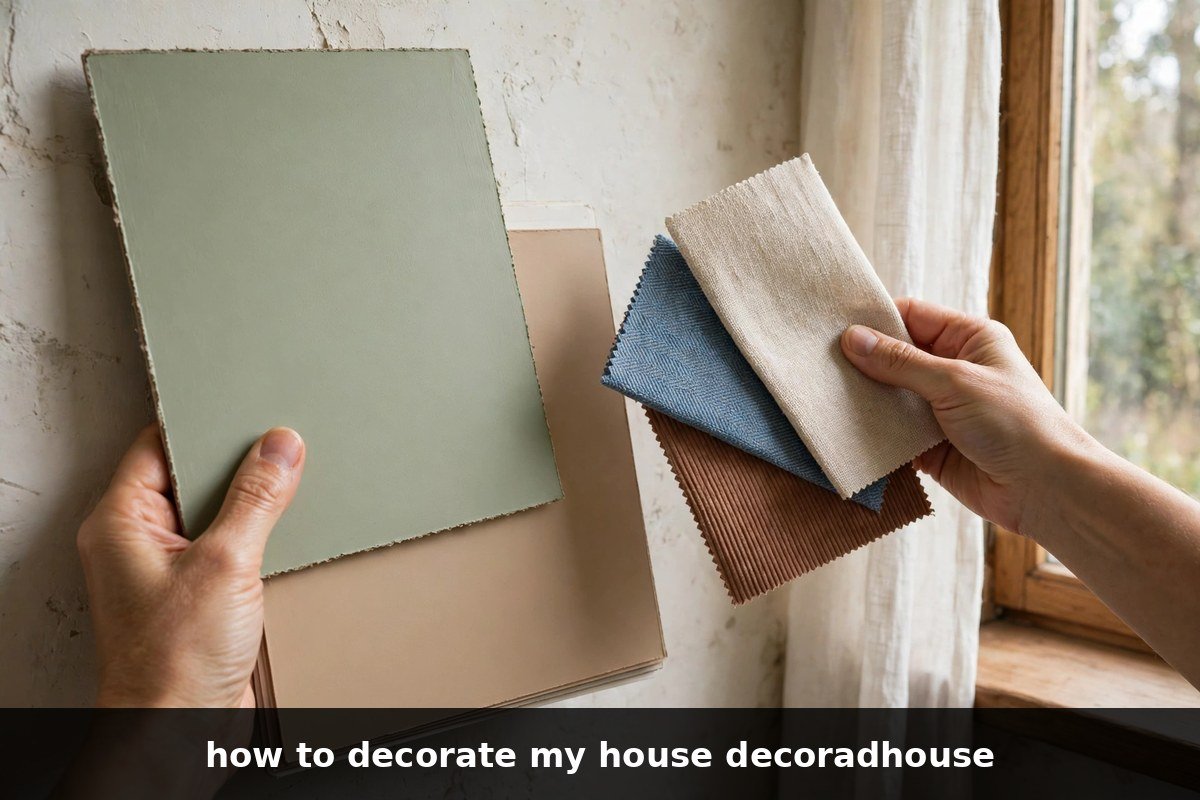
Build the palette outward from a fixed point, because a palette invented in a shop has to fight the room, while a palette drawn from the room starts allied with it. The fixed point might be the floor’s tone, the light’s character, a rug that is staying, a painting that owns a wall. From it, choose the room’s working colours in their proportions — a dominant ground, a supporting second, an accent used sparingly — and write the proportions down, because a palette is a ratio, not a list: three colours in equal shares is a committee, while the same three in a clear hierarchy is a scheme.
Test at scale, in the room, across a day. Paint belongs on boards large enough to judge — offcuts or lining paper painted and moved around the walls — because a colour’s behaviour changes with the wall it stands on and the hour it is seen at, and the tester-pot square on one wall at noon is the most misleading document in decorating. Live with the boards for a full cycle of light before the palette is declared fixed; the process can afford the day, because every later stage — fabric, furniture, art — will be chosen against this decision, and remaking it later re-opens all of them.
Hold one discipline across the whole house: the palettes of adjoining rooms need not match, but they must be able to meet at a doorway without an argument. The process answer is a small set of through-lines — a repeated material, a shared undertone, the same metal — that lets each room keep its own character while the house reads as one household’s decisions rather than a showroom corridor.
Which Anchor Pieces Go First, and Why?
Anchors are the room’s largest presences — the sofa and rug in a living room, the bed in a bedroom, the table in a dining room — and they go first for a structural reason: everything else in the room is sized, placed and coloured in relation to them, so choosing them last forces every earlier choice to be a guess. Size them from the survey’s measurements, not from the furniture shop’s floor, where every ceiling is high and every room is implied to be larger than yours. Take the rug from the seating outward — every chair and the sofa should land at least their front feet on it — and take the sofa from the wall it will stand against, leaving a hand’s width of air at either end; both figures are already sitting in the survey.
Buy or place the anchors before the walls are finished, even if delivery waits, because the anchor’s actual colour in the room’s actual light is the palette’s last examination. Fabric swatches ride home and sit on the floorboards for the same reason boards carry paint: the room is the only laboratory whose results count.
Anchors are also where the budget is told the truth. The process spends first and most on the pieces touched and used daily, because a room forgives an inexpensive lamp standing beside a sound sofa far sooner than the reverse. Sequencing the money this way is not austerity; it is the recognition that the layers can be upgraded one by one in the years after, while a failed anchor poisons the room at full size from the first day.
How Do the Layers Follow — Walls, Textiles and Light?
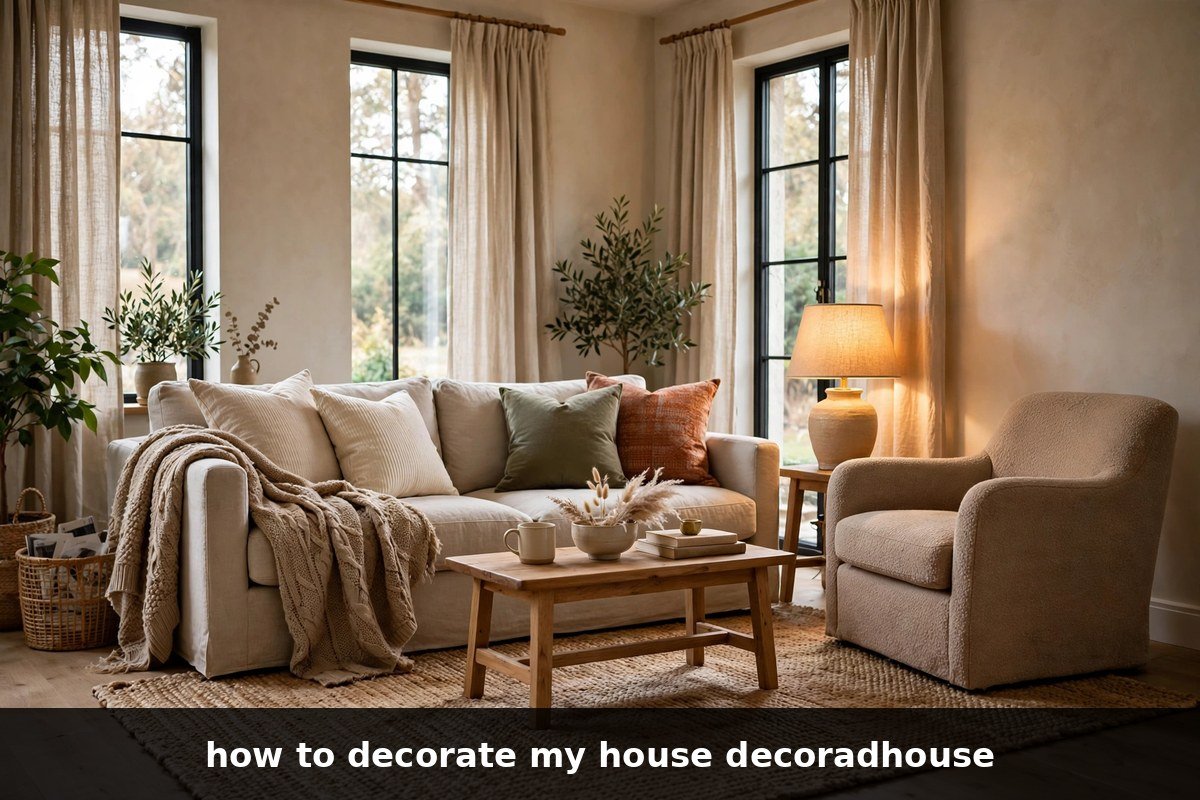
Walls come after anchors in the working order, because the wall treatment must serve the room that now exists on paper at full size. Paint is the default for a reason — it is the cheapest large decision to remake — while paper is a commitment of pattern and quantity, and its quantities should be calculated rather than estimated: run the wall dimensions through the Wallpaper Calculator so that pattern repeat and roll count come from the room’s real measurements, with the stated spare roll kept against the repair the future always eventually requests.
Textiles follow the walls, chosen against both: curtains measured for their drop and fullness from the actual window — high and wide of the frame where the room needs height, to the sill or the floor by the room’s formality — and cushions and throws carrying the palette’s accent in its agreed proportion. This is the layer where the through-lines are paid: a curtain fabric that nods to the hall’s runner is how separate rooms become a house.
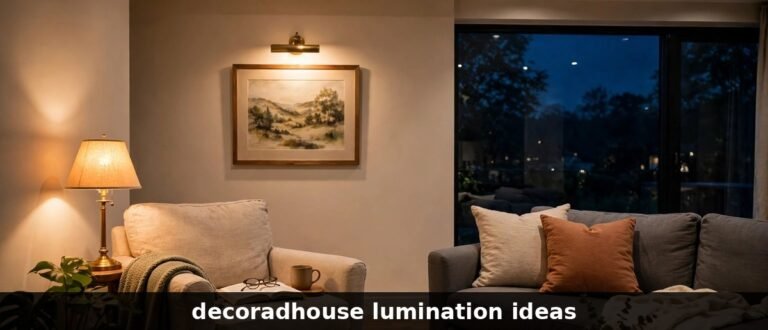
Light is the final layer and the one most often bought first by mistake. A decorated room needs light in kinds — general, task and accent — placed where the furniture now demonstrably stands: the reading lamp beside the chair that is actually read in, lit from the side the book is held. Buying light last feels backwards and is simply correct, because a lamp is a piece of furniture with a second job, and its first job is to stand in the right place at the right height, which only the finished arrangement can tell you. Behind the process sits the system it serves — decoration as a system of colour, scale and light explains why the layers are ordered the way this process places them.
| Stage | What gets decided in it | What must exist before it can start |
|---|---|---|
| Survey and brief | Measurements, light record, stays, each room’s failure list | Nothing — this stage is the foundation the rest stand on |
| Palette | Colours and their proportions, tested at scale in the room’s light | The survey’s fixed points, honestly agreed |
| Anchors | The largest pieces, sized from measurements, colours proven in situ | A palette to choose them against |
| Walls | Paint or paper, quantities calculated from real dimensions | Anchors chosen — the wall serves the room, not the reverse |
| Textiles and light | Curtains, soft layers, lamps in their three kinds | The finished arrangement — placement is the decision |
| Final check | Snags found across a full day of light and written down | A room lived in for at least a few days, not just installed |
How Do You Finish — the Final Check?
Live in the room before judging it, because installation day is the worst critic a room will ever face: everything is new, nothing has settled into use, and the eye is hunting for faults it has paid for. Give the room several days of ordinary life — meals, evenings, the morning routine — and then walk it deliberately at three hours: morning, midday and lamplight. Different failures keep different hours. The glare that blinds the breakfast chair exists only before ten; the corner that dies at night is invisible at noon.
Write the snag list as you find it, in the room, with the tape in hand: the picture hung a hand’s width high, the curtain that pools short, the lamp whose switch hides behind the sofa’s arm. A written list converts the vague sense that something is off into a morning of small corrections, most of them free — rehanging, rearranging, swapping two pieces between rooms. The process ends when the list is empty, not when the deliveries stop; and the survey notebook, measurements and palette proportions are filed rather than discarded, because they are the next room’s — and the next decade’s repair’s — foundation documents. A finished room can still hold one stubborn fault, and for that narrower job one measured fix per problem is the right tool after the process has done its work.
The Limits of a Process
A process orders decisions; it cannot enlarge a room, move a window or repeal a budget. Where the survey finds structural facts — a room too small for its intended use, light no palette can rescue, damp that must be cured before decoration can survive — the honest move is to stop the process at that room and deal with the building first, because decorating over a defect converts a repair bill into a repair bill plus a decorating bill.
Tenure sets a second limit. A rented house forbids some stages and discounts others, and the process adapts — anchors and textiles carry more of the scheme, walls less — but it adapts honestly only if the constraint is admitted at survey stage rather than discovered at the paper-hanging stage. Similarly, a house being decorated for sale is a different brief from a house being decorated for a decade, and the process serves the brief it is given; confusing the two produces rooms that please neither buyer nor dweller.
Finally, the process assumes the household can tolerate sequence — rooms out of service in turn, decisions held while earlier stages dry, settle and prove themselves. A household that needs every room at once, all the time, will break any order it is given; the realistic adaptation is one room taken completely through the process at a time, finished and lived in, which is slower per house and faster per room than the whole house held in permanent half-decoration.
Frequently Asked Questions
Which room should be decorated first?
The room whose failure costs the household most each day — usually the room the evenings are lived in, or the bedroom that starts every morning badly. Beginning where the benefit is daily and visible does two jobs: it proves the process on the household’s own evidence, and it funds morale for the slower rooms. Beginning with the spare room because it is easiest produces a perfect room nobody uses and a household unconvinced.
How long does the whole process take for one room?
Longer than the decorating programmes suggest and shorter than dread predicts: the survey and palette stages take days of mostly waiting — for light, for boards to be lived with — while anchors, walls and layers take the working days themselves. A single room honestly taken through every stage is a matter of a few weeks of elapsed time with bursts of work inside it, and the elapsed time is mostly the process protecting itself: colours judged across days, paint cured before furniture stands against it.
Do I really need to empty the room?
For the walls stage, effectively yes — paper and paint need access, and furniture shrouded in the middle of a room guarantees both a worse finish and a longer job. For the survey and palette stages, the opposite: the room should be lived in and observed as it is, because its failures announce themselves in use. The process’s rhythm is observe it full, then empty it once, briefly, at the stage that demands it — not a household living among boxes for a season.
What if two people in the house want different palettes?
Settle it at the fixed points, where the argument is smallest: agree what stays, agree the through-lines, and let each contested room be tested at scale rather than debated in the abstract — most palette wars are fought over tester squares and end at board size, where both parties can see what the light actually does to each candidate. Where a genuine split survives testing, divide the house by room rather than compromising every room into a colour neither person chose.
Can I decorate one room at a time, or must the house be done together?
One room at a time is not merely allowed; for most households it is the process working as designed. The house-level decisions — the through-lines, the shared undertone, the metal — are made once, early, precisely so that rooms can then be taken singly, in any order the household’s life dictates, months apart, and still meet at their doorways without an argument. Together is a decision, not a schedule.
Conclusion
Taken stage by stage, how to decorate my house decoradhouse is a claim about order: measure before choosing, fix the palette before buying, anchor before layering, and judge the room only after living in it across a full day of its light. Houses decorated in that order rarely need rescuing, because their mistakes were made on paper, on boards and in notebooks — the three cheapest places a decorating mistake can happen. Further room-by-room guidance, written to be measured against your own house, is published at smart decoratoradvice.


1 comment