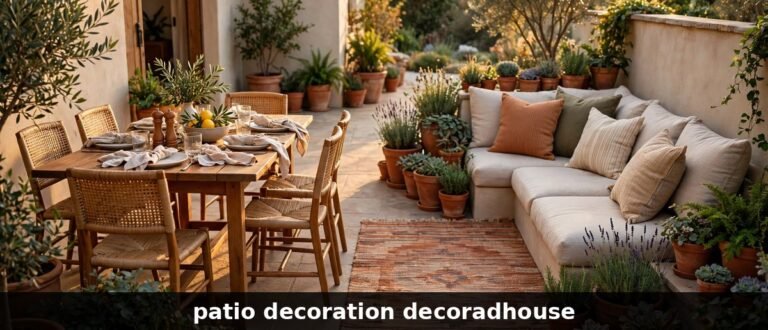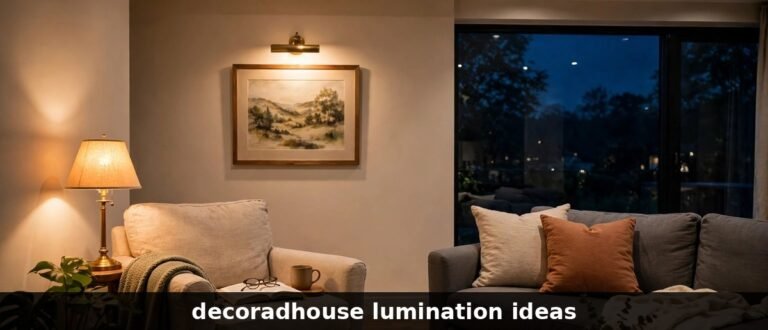
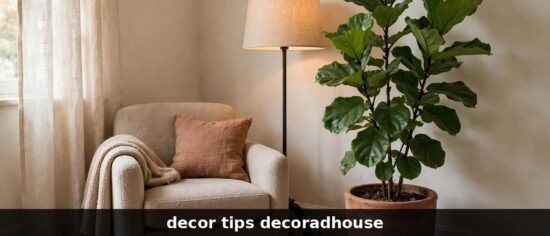
Decorating problems are easier than they look once each is named precisely — the dark room, the small room, the bare wall, the furniture that will not agree, the empty corner. The decor tips decoradhouse here give each problem one measured fix, sized to your room, not to a photograph.
Key Takeaways
- Work problem-first: name the room’s actual complaint in measurable terms before reaching for any fix, because a fix aimed at the wrong problem is decoration spent twice.
- Every tip here carries its measurement — mirror placement by window position, art width by the furniture beneath it, rug size by the seating it must hold.
- Test small before committing: a moved lamp, a borrowed mirror and a sheet hung as a curtain will prove or kill most tips in an evening.
- Perception is the material: most room problems are problems of light, scale and repetition, and those three levers are cheap to move.
- A tip that cannot survive its own limit is still useful — knowing the dark room’s ceiling of improvement is what stops money being poured past it.
What Makes a Decor Tip Worth Using?
A tip earns its place by passing three tests. It must name a problem a real room has, in terms a tape measure or a photograph can confirm; it must propose one change, not a scheme, so that its effect can be seen and credited; and it must be reversible or cheap enough to abandon without grief when the room votes against it. The decor tips decoradhouse gathers below are held to that standard deliberately, because the internet’s alternative — the transformation, the haul, the room redone in a weekend — teaches households to fix rooms by replacing them, when most rooms are one well-aimed change away from working.
The working method is diagnostic. Stand in the room at the hour it bothers you and describe the complaint as a measurement would: not “this room is gloomy” but “the far half of this room receives no direct light after ten in the morning”; not “this room is small” but “the seating fits, but the eye meets a wall in every direction within three metres”. A problem stated that precisely usually contains its fix — and where it does not, it at least prevents the commonest waste in decorating, which is an excellent solution delivered to a room that had a different problem.
The Room Feels Dark — What Actually Fixes It?
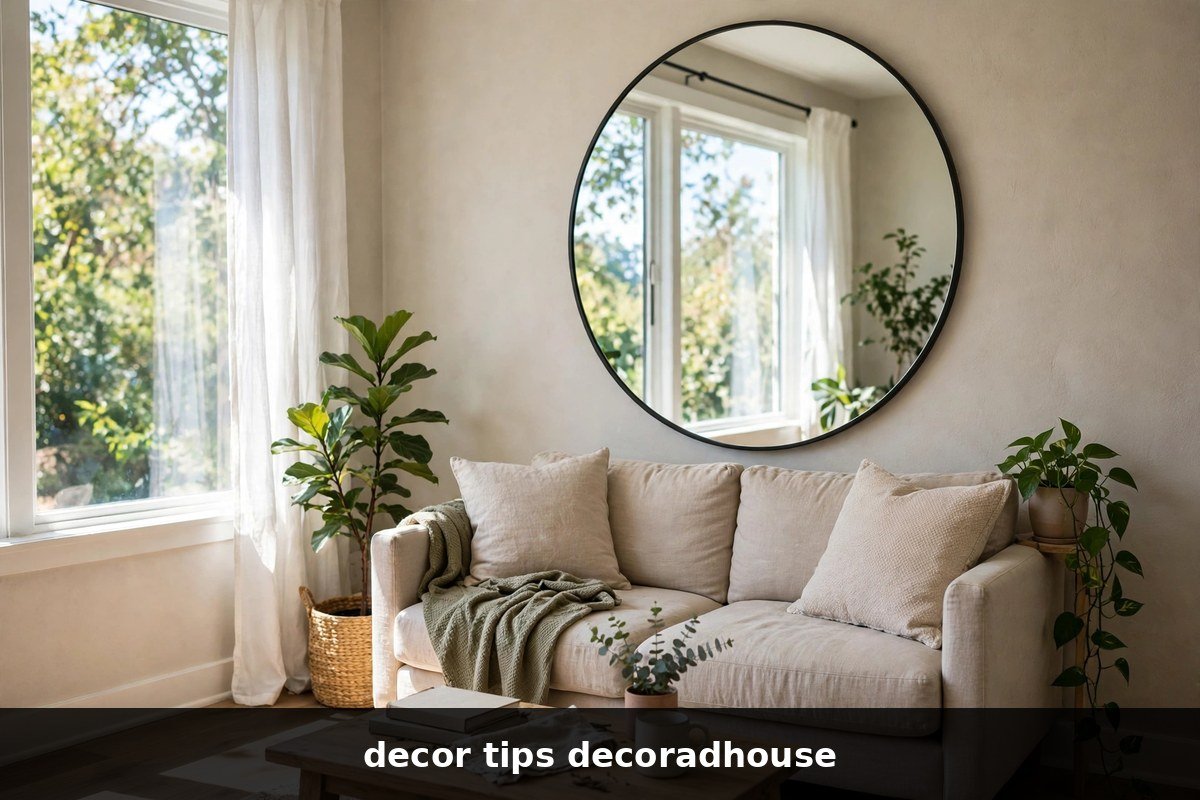
A dark room is short of bounced light, and the fixes work by giving the light it has more surfaces and better angles. The strongest single move is a mirror placed to catch the window: on the wall opposite or adjacent to the glass, positioned so that someone sitting in the room sees reflected daylight in it rather than a reflected ceiling. Size follows the window’s job — a mirror at least half the window’s width begins to matter; a hand-mirror gesture on a large dark wall is jewellery, not lighting.
Surfaces are the second lever. A ceiling in a clean white and walls in a finish with a slight sheen return noticeably more of the room’s light than the same colours in a flat matt, and the floor — the largest surface nobody counts — can be lifted with a pale rug whose area is measured to the room’s seating rather than scattered as a mat. Bulbs complete the circuit: a dark room lit by one central pendant is dark by design, and adding a second source low down — a table lamp in the dead corner — flattens the gloom gradient that makes a room feel cave-like, for the price of the lamp and its shade. A dark room that resists every fix here is usually telling you the order was skipped, and the decorating process in work order is the longer answer it is asking for.
| Problem, stated measurably | The one fix to try first | The measurement that sizes it | Effort it honestly costs |
|---|---|---|---|
| Far half of the room gets no reflected daylight | Mirror placed to catch the window’s light | Mirror at least half the window’s width, hung where seated eyes meet it | An hour, including the ladder work |
| Seating island floats, room reads smaller than it is | Rug sized to the seating, not to the leftover floor | Front legs of every seat on the rug; rug counted into the floor area | A measuring evening; the rug itself is the spend |
| One long bare wall, eye slides off it | Art or grouping at furniture scale | Piece or grouping about two-thirds the width of what stands beneath it | An afternoon of hanging and rehanging |
| Four pieces, four woods, no agreement | One repeated colour or material, three times | Count the repetitions from the doorway — three is the minimum that reads | Mostly moving and swapping what exists |
| Corner dead in every arrangement | A vertical trio — plant, light, one tall piece | Height reaching at least two-thirds toward the ceiling picture line | An hour of placing, a week of living with it |
The Room Feels Small — What Changes the Feeling?
A small feeling is rarely about floor area; it is about how soon the eye stops. The rug is the first fix because it draws the room’s true boundary: seating arranged on a rug reads as a deliberate island in a room of its measured size, while the same seating on bare floor reads as furniture stored in a corridor. Size the floor covering from the room’s real dimensions — run the length and width through the Carpet Calculator so the covering is chosen against the actual floor area and the seating’s footprint, rather than by the three standard shop sizes that fit almost no room exactly.
Curtains hung high and wide are the second lever: the track or pole fixed above the frame and extended beyond it, so the fabric stacks on the wall and the whole window’s glass is exposed, with the drop falling to the floor. The window reads larger, the wall reads taller, and no square centimetre of room was harmed. The third lever is legs: furniture raised on visible legs, with floor showing beneath, lets the eye travel under and through, while pieces that sit as solid blocks on the floor announce their full volume. A small room furnished with low, leggy pieces and one honest rug will feel larger than a bigger room furnished in blocks — a sentence worth testing with the existing furniture before believing, since two of its three moves cost nothing but an afternoon’s rearranging.
| Lever | What it changes for the eye | What it honestly costs |
|---|---|---|
| Rug at seating scale | The room’s boundary drawn deliberately; seating reads as an island, not storage | The rug itself, sized from the measured floor |
| Curtains high and wide | Window reads larger, wall reads taller, full glass exposed | A pole, its fixings, and fabric at the honest drop |
| Legs visible under furniture | The eye travels under and through; volume stops announcing itself | Nothing, where pieces can be raised or swapped between rooms |
The Wall Is Bare and the Corner Is Empty — What Goes There?
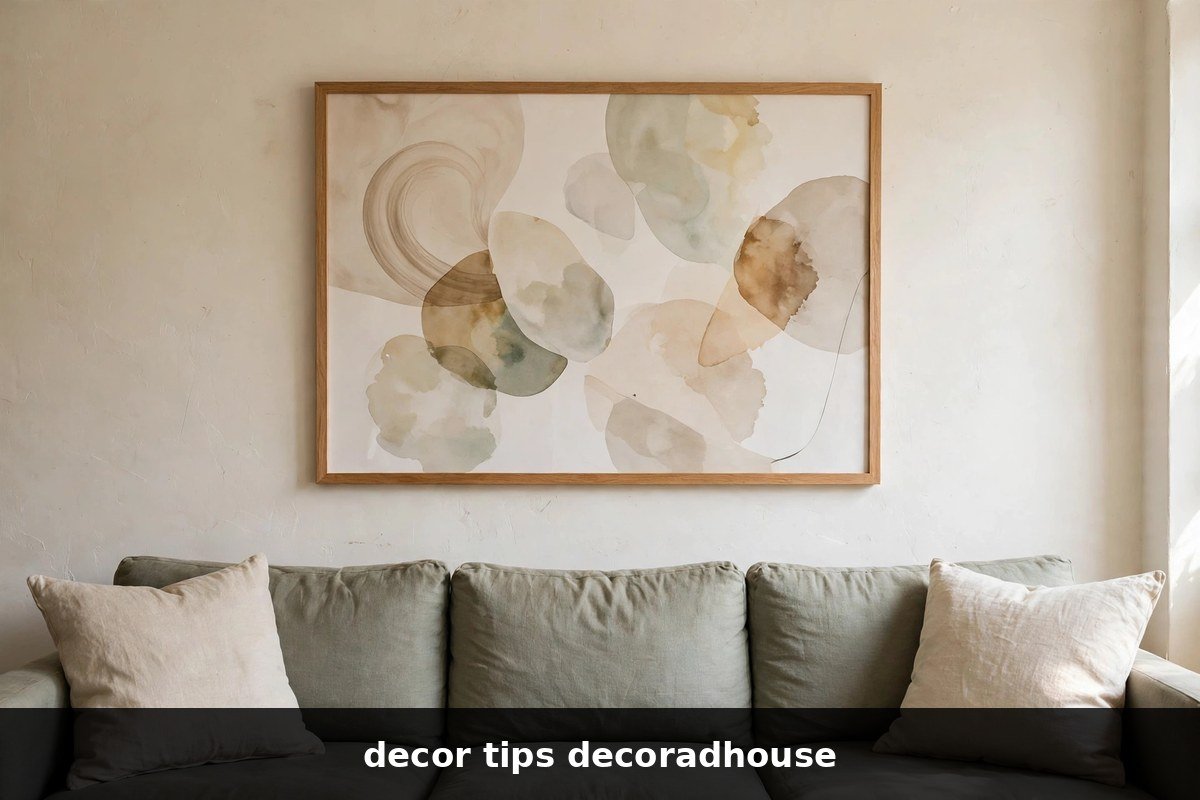
A bare wall is a scale problem dressed as an emptiness problem. The fixing rule is proportion: a picture, or a tight grouping treated as one picture, should span roughly two-thirds of the width of the furniture beneath it — a sofa, a console, a bed’s headboard — and hang with its centre near standing eye level, adjusted so the gap between frame and furniture reads as intentional rather than as storage. One large piece at that scale settles a wall; six small pieces scattered across it merely give the eye six apologies. Measure the furniture first, mark the two-thirds width on the wall in tape, and live with the tape for a day — the cheapest gallery in the world.
The empty corner yields to a trio rather than a thing: something tall and alive, something that gives light, and one piece with a use — a plant that will genuinely reach upward, a floor lamp whose shade sits at reading height, and a small chair, a basket or a stack of books that earns the floor it stands on. Corners fail singly: the lone plant is a waiting room, the lone chair is a naughty step. In threes, at staggered heights, the corner becomes the room’s full stop instead of its leftover.
The Furniture Does Not Match — How Do You Unify It?
Mismatched furniture is unified by repetition, not by replacement. The eye forgives any mixture — eras, woods, styles — when something in the room repeats deliberately: one colour appearing at least three times in the sightline from the door, one material echoed between pieces that otherwise disagree, one shape rhyming across the room. Three is the operative number because two repetitions read as coincidence and four as a theme; three reads as a decision. The repetitions can be nearly free — cushions moved, a throw carried from another room, books stacked by jacket colour — which is why this is the tip to try before any other, on the room as it stands tonight.
Textiles are the bridge timber. A runner, a pair of cushions or a single curtain fabric that borrows one colour from each of the two warring pieces declares them relatives; hardware does similar work at smaller scale, where matching the knobs and handles across dissimilar wooden pieces quietly files them under one administration. What does not work is the halfway purchase — a new piece bought to mediate, which usually arrives as a third accent with its own demands — and the purge, selling sound furniture to buy agreement at showroom prices. Rooms that look collected rather than matched are a legitimate and often richer destination; the tip’s job is to make the collection look intentional, and intention is repetition, visible from the door. Unifying furniture is the system showing through at small scale — the room-by-room decoration system is the fuller account of the palette and scale logic these fixes borrow.
The Limits of Quick Tips
Tips move perception, and perception has a ceiling set by architecture. A room with one small north-facing window can be made noticeably brighter, calmer and better used; it cannot be made sunny, and the household that keeps spending toward sunny will pass the point of good returns within two or three fixes. The honest use of the limit is a stopping rule: apply the single fix, live with it a week, re-measure the complaint at the hour it bothered you — and only then decide whether the room has another problem or the same problem at a size only building work can change.
Stacking is the second limit. Each tip here is tested singly, and rooms are not obliged to honour that isolation: the mirror that fixes the dark room can glare in the small room’s sightline, the large rug that grounds the seating can swallow a small floor’s last visible border. Add tips one at a time, with the living-with-it week between, or the room becomes a committee of good ideas voting against each other.
And some problems are not decor problems wearing a disguise too thin to see through. A room that feels cold because its radiator is undersized, a wall that looks bare because damp has taken every picture hung on it, a corner empty because the floor slopes — these present as decorating complaints and belong to other trades. The diagnostic habit that opens this article is also its safeguard: a problem stated measurably will occasionally state itself out of decorating altogether, and that is a tip worth having too.
Frequently Asked Questions
What is the single fastest decor change in a room?
Light, moved. A lamp carried from where it decorates to where the room is actually sat in — beside the reading chair, into the dead corner — changes a room’s evening character in five minutes for nothing, and it is the correct first experiment for almost every complaint, because so many room problems are light problems at the hour the room is used. If the lamp move transforms it, the problem was placement; if it changes nothing, you have learned that too, for free.
How big should art above a sofa be?
About two-thirds of the sofa’s width, hung so its centre sits near eye level when standing, with the gap between frame and sofa back small enough to read as a relationship rather than a coincidence. A single piece or a tight grouping both obey the rule — it is the total width that counts. Mark the width in tape on the wall before shopping; the tape outline, lived with for a day, has saved more money than any sale.
Do mirrors really make a room lighter?
Yes, when they are placed as instruments rather than ornaments: opposite or beside the window, angled to throw daylight into the room’s occupied half, large enough to carry a meaningful share of the window’s light. A mirror reflecting a dark wall returns a well-lit view of a dark wall, which is why placement is the tip and the mirror merely its equipment. Test with any mirror the house already owns, propped for an evening, before buying the grand version.
How do I test a tip before committing to it?
Simulate it at full scale with borrowed materials: the sheet hung where the curtain would fall, the rug outlined in tape on the floor, the mirror propped, the cushions carried in from another room. Live with the simulation through the hour the problem bothers you — most tips declare themselves within one such hour. A simulation that fails has cost an evening; the purchase it prevented would have cost the return trip, the restocking argument and the doubt.
When is a room problem not a decor problem?
When its measurement points at the building rather than the arrangement: temperatures that no lamp will fix, damp that ruins what it touches, floors and walls out of true, light blocked by a structure rather than a curtain. The giveaway is a complaint that does not change when the furniture does. Decorating such a room first is not optimism, it is sequencing debt — the fix will have to be undone to reach the cause, and both bills will arrive.
Conclusion
Sorted by problem, decor tips decoradhouse reduce to a method rather than a mood: state the complaint as a measurement, apply the one fix sized to it, live with the result for a week, and only then look for the next problem. Rooms improved that way stop improving at the right place — at the limit where perception ends and architecture begins — with the money unspent on the far side of that line still in the household’s pocket. More measured fixes for real rooms are gathered at smart decoratoradvice, where each one can be checked against your own walls first.